• Link to X
  • Link to Facebook
  • Link to Instagram
  • Link to LinkedIn
  • Link to Youtube
  • Donate to fight Lafora disease!
  • Contact Us
info@chelseashope.org
Chelsea's Hope Lafora Children Research Fund
  • What is Lafora Disease?
    • About Lafora Disease
    • ICD-10 Codes for Lafora Disease
    • Lafora Disease Symptom Checker
    • Lafora Disease Therapy
    • Lafora Disease Clinical Pipeline Progress
    • ION283 Safety Study
    • Family Stories
  • About Us
    • Chelsea’s Story
    • Leadership Team
    • Advisory Board
    • Contact
  • News
  • Resources
    • For Families & Caregivers
      • Newly Diagnosed
      • Tips for Lafora Disease Families
      • Bereavement Support
      • G-Tube Tips – A Mother’s Perspective
      • Lafora Clinical Network Registry
      • Refer Your Clinician to the Registry
    • For Researchers
      • Lafora Mutations Database
      • Lafora Canine Registry and Database
      • Apply to Join the Clinical Registry
  • Events
    • 2026 Lafora Science Symposium
    • Courage in Care: Lafora Caregiver Series
    • Lafora Disease Roundtables
  • Get Involved
    • Ways to Give
    • Volunteer
    • Join Canine Registry
  • Click to open the search input field Click to open the search input field Search
  • Menu Menu

Anissa Merriam

January 31, 2022/by Chelsea's Hope

Anissa Merriam

Anissa Merriam was a vibrant teenager, a talented artist who loved anime and excelled in honors classes. But at 14, she started dropping her pencil and her hairbrush, and struggled with her studies. Something wasn’t right, she told her parents.
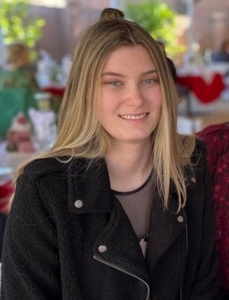
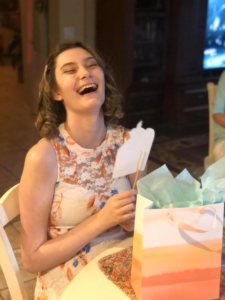
Eventually, Anissa was diagnosed with a rare, neurodegenerative form of epilepsy that strikes in early adolescence, causing intractable seizures and childhood dementia. Most patients die before 30. Today, Anissa, at 23, likes to dress up like 1930s child star Shirley Temple, watch Disney movies and tap dance.

Anissa suffers from daily seizures and childhood dementia. She has a g-tube placed in her stomach to use for all her medications and she experiences ongoing cognitive decline along with swallowing issues.

At the age of 23, Anissa receives full-time care at home from her family and nurses. One of the most heartbreaking aspects of Lafora disease is that it robs seemingly healthy teens of their full potential.

Anissa is a talented artist and had several pieces of art selected for art shows during high school. In fact, she dreamed of studying art in college and using her talent as she reached adulthood. Anissa doesn’t draw any more telling her mom that she is unable to draw because her myoclonus, jerking motions, make it difficult to use her pencil and she has seizures while drawing due to Lafora. She often struggles just to write her name. Anissa also expresses her sadness about not having the experiences of driving, college life, and her independence like other young adults her age.

“This is a disease where we watch them go backward.”

Anissa’s doctors have informed her family that in time and without a treatment or a cure, she will lose her ability to walk and talk. Most children with Lafora do not survive past 10 years from the onset of symptoms.

Helping fund Anissa’s fight for treatment will slow the progression of the disease and give her time as she waits for a cure.
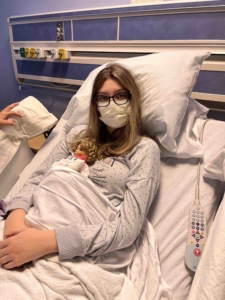
She has participated in a two-year natural history study to collect data on the progression of the disease at UT Southwestern Medical Center in Dallas. The information gathered has established biomarkers to help drive a clinical trial that was to begin in 2021.

Unfortunately, the clinical trial was delayed due to covid and other FDA requirements. The delay of this clinical trial was devastating to the family because Lafora progression never stops.

Recently, Anissa and her family were given hope again with a potential treatment that could help slow and possibly stop the progression while she waits for the clinical trial to begin, a biotechnology company with the promising treatment could help not only Anissa but other Lafora patients.

The only thing holding this process back right now is funding and since Lafora is ultra-rare, there is no funding to help to move their treatment forward to patients.

Your donation could make this treatment possible for Anissa and others who suffer from this horrific disease.

Time and slowing the progression are what Anissa an all Lafora children urgently need to make it to delayed clinical trials.

Please read this Washington Post article dated June 4, 2020 sharing Anissa’s Lafora story. It was written during covid when trials and research labs were shut down.

Washington post story

Donations can also be made on this website by clicking Donate.


Share this entry
  • Share on Facebook
  • Share on X
  • Share on WhatsApp
  • Share on Pinterest
  • Share on LinkedIn
  • Share on Tumblr
  • Share on Vk
  • Share on Reddit
  • Share by Mail
https://chelseashope.org/wp-content/uploads/2022/01/Anissa-200x200-1.jpg 200 200 Chelsea's Hope https://chelseashope.org/wp-content/uploads/2022/02/ChelseasHope1.png Chelsea's Hope2022-01-31 23:43:542026-07-29 13:59:19Anissa Merriam
0 replies

Leave a Reply

Want to join the discussion?
Feel free to contribute!

Leave a Reply Cancel reply

You must be logged in to post a comment.

About Chelsea’s Hope

Chelsea’s Hope began as a website in the fall of 2007 to share Chelsea Gerber’s story with family and friends. A 501(c)(3) organization since 2009, we have made an impact by raising awareness, connecting families worldwide, funding research, and maintaining hope. Our mission is to improve the lives of those affected by Lafora disease and help accelerate the development of treatments. [Read More]

Children of Chelsea's Hope

  • Abdul Ali

  • Adela Richer

  • Alexis Howard

  • Alexis Rodriguez

  • Amanda Gellel

  • Amarah Ahmed

  • Angel Shumate

  • Angelina Lati

  • Anissa Merriam

  • Carmen Anastasio

  • Chelsea Gerber

  • Chelsea Marie Sinclair Merrill

  • Daniela Cerracchio

  • Diane Victoria Gellel

  • Douglas Jacob Lucken

  • Elisa Brackin

  • Emine Malaj

  • Gigi Breadiy

  • Grant Pinder

  • Jake Buie

  • Janet Lee Harris

  • Janine Lee Rodriquez

  • Jessica Faludi

  • Jessica Masoner

  • Jessica Nicole Ambroe

  • John Sharp

  • Kain Brody Unzicker

  • Kelsey Anne Harris

  • Khari McCrary

  • Kris Shumate

  • Kristen Rice

  • Lucy Terceira

  • Mallorie Taylor Lindo

  • Mathilde Daubjerg

  • Mathys Lucas

  • Matthew DeSimas

  • Mia Vivian Clement

  • Milana Gajic

  • Rebecca Cotton

  • Robin

  • Shamoan Ahmed

  • Sonam Ahmed

  • Tatjana Gajic

  • Taylor Nicole Mankins

  • Thomas Barter

  • Tracy Anastasio

  • Zaina Zaid Nemer

The mission of Chelsea’s Hope is to improve the lives of those affected by Lafora disease and help accelerate the development of treatments.

Chelsea’s Hope Lafora Children Research Fund is an IRS 501(c)3 nonprofit organization. EIN: 27-1008382

Location imageChelsea’s Hope c/o Dr. Donohue

976 Maywick Dr.

Lexington, KY 40504

info@chelseashope.org

Use ICD-10 code G40.C for Lafora.

    • Follow us on
    • Facebook
    • Instagram
    • Twitter
    • LinkedIn
    • YouTube
    • TikTok
ION283 Safety Study
Copyright © 2017-2026 Chelsea's Hope Lafora Children Research Fund. All Rights Reserved.
  • Home
  • News
  • About Lafora Disease
  • Donate
  • Contact
  • Privacy Policy – Other Policies
Scroll to top Scroll to top Scroll to top