

Jessica Masoner
(November 6, 1995-February 26, 2015)
Roeland Park, Kansas
 Until about 6 months ago, my daughter Jessica’s life was just like any other 15 year old teenage girl. The morning of April 26, 2011 began like other days. Jessica and her two sisters were getting ready for school when Jessica fell to the ground and had a Tonic Clonic (Grand Mal) seizure.
We took Jessica to the ER where she was checked out and sent home. Over the next few days, she acted as though nothing had happened. I was hoping that this was a onetime seizure and that, perhaps, the seizure was related to the stress of being in a new school district.
Two weeks later, I noticed that when she walked, she would trip and fall and she started having myoclonic seizures (jerking in the arms and legs). Jessica was getting dizzy and shaky and she soon had almost constant myoclonic seizures; her poor body was never still and free of the jerking.
I called the neurologist and she expedited the order for an EEG; the neurologist told me, after examining the results of the EEG, that Jessica had Generalized Epilepsy. I was devastated and began to cry. The neurologist looked directly at me and said that this is not a big deal- that with the proper medications, Jessica would be absolutely fine and completely normal. It appeared, at first, that she was absolutely right.
After a month of taking the anti-seizure medications, Jessica got very depressed and angry. The doctor explained that those emotions were a side effect of the medication and that the situation would improve. Jessica, however, was crying all the time, and she was acting very mean to her sisters.
We noticed, at the same time, that it seemed as though Jessica couldn’t see very well and that reading was becoming increasingly difficult; her cognition was beginning to decline.
The doctor continued to say that the seizure activity was the cause of her cognitive decline and she upped her dosage of her meds. The doctor ordered an MRI and I was sure they find some type of brain damage because our Jessica had declined so much. The MRI was normal however.
We went to see a Neuro Psychologist to see if the meds or seizures were the cause of the cognitive decline. He, too, saw a huge decline in her cognition but he thought it was due to the fact that the seizures were not under control. The doctor ordered a second EEG and that is when they discovered that Jessica had rare and unusual brain activity. Jessica’s neurologist told us that this type of brain activity was only seen in progressive Myoclonic Epilepsy which is much harder to control. She explained that Myoclonic Epilepsy is caused by a genetic disease and that there is no cure. It was at this point that the doctor ordered the test for Lafora Disease.
 I still hoped and believed that the doctors just hadn’t found the proper meds or the proper dosage to treat her with. In the meantime, as we waited for results, the doctor did change her medications and I saw a huge improvement. Jessica was almost normal again. At this point, I was hopeful that it was the medication that was making the difference and that, perhaps, we had it under control.
In August of 2011, Jessica’s test for Lafora Disease came back positive. This was the most heartbreaking and devastating news a parent could ever hear. The medication that had seemed to be improving her condition, no longer was working after a month and, very quickly, Jessica’s condition began to to rapidly regress.
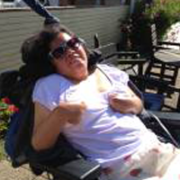
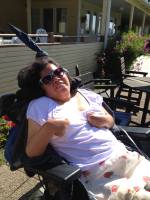
I sit and watch my little girl lose more and more of herself each day. Over time, Jessica will lose her memory, her ability to talk, walk and eventually, she will become bed-bound.
Lafora seems to be progressing faster in Jessica than in other children with the disease. It’s been six months since Jessica’s first seizure and I already need to bathe her and dress her and help her with her every day needs. Jessica shakes so much that it is hard for her to eat and she can’t walk more than 20 feet without our assistance or without the aid of a wheelchair. Jessica has a lot of Absence seizures (spacing out) which I now believe, in retrospect, she has had for several years. I attributed the behavior to ’normal’ teenage behavior.
Jessica is no longer able to attend school so she is being home schooled.
This awful disease hugely affects our whole family in so many ways.
Because Lafora is a genetic disease, we had our younger daughters tested because there was a 25% chance of them also having this awful disease. Jessica and our other two girls are unaware of the name and details about Lafora Disease. We want to spare Jessica the added pain and heartbreak of what she is already going through.
I am missing a chunk of my heart and it will never again be whole. Words can’t explain how I feel; I am just empty.
 Jessica is a beautiful and excellent daughter and she doesn’t deserve for this to be happening to her. Jessica is my first born which makes her the first true love of my life.
On November 6, 2011 Jessica turned 16. Jessica should be getting her first car for her birthday but, instead, she is getting a wheelchair. Instead of her wanting clothes, makeup and jewelry like other 16 year old girls, she asked for a baby doll on her birthday. This is what Lafora does to our children. Instead of moving our children forward, Lafora moves them backwards. Lafora take the lives of our children little by little until there is nothing left to take but their life.
Sincerely,
Jessica’s mom, Sheri
 Sweden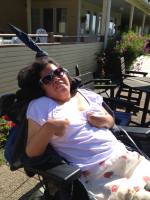


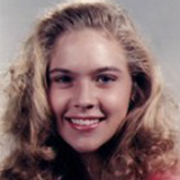
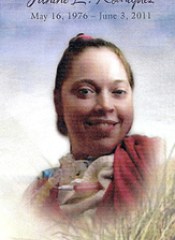 Rodriquez wanted to be a model, and her mother helped her get a start in that, getting her into a beauty pageant when she was 15. She’d finished runner-up. She’d also been in gymnastics and ice skating.
 She loved to dance, started at the age of three, and continued till she was unable. She was in various competitions and received trophies for her performances. She was able to have two great years in high school as a Centrallette performing with the school marching band twirling flags and winter color guard. Growing up she also loved ice skating, gymnastics, horseback riding, and swimming.
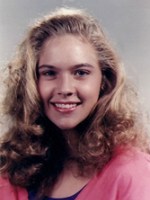 She was basically very healthy, childhood sicknesses, normal colds, sore throat, and chicken pox. Toward the end of her sophomore year, actually a month before her 16th birthday in April, 1992, Janine started complaining of seeing colored spots occasionally and having sudden jerks. She’d mention walking with her books in arms, a sudden jerk and dropping them or writing in class, and a sudden jerk with pencil flying. Her assignments would take longer to finish and she’d be putting in more hours of studying, less sleep. Being a perfectionist, her grades were very important to her and we thought maybe problems were related to stress.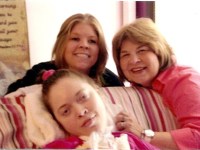

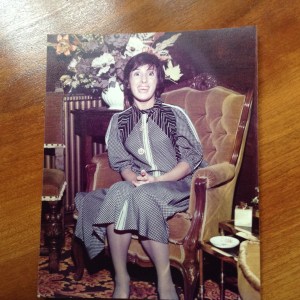 My inspiration for the following outpouring was finding your charity, Chelsea’s Hope Lafora Children’s Research Fund, on line. My heart goes out to all the children and their families who are suffering with, and dying from, this terrible disease. My admiration goes out to all of you involved in this charity and the great work you are doing in raising needed money for research and, just as important, the support you give each other. If we had had the technical knowledge and communications that we have today, back in 1969, perhaps our daughter would have been diagnosed much earlier and she, with us, would have had a better grasp on what was happening while she still had the capability of speech and understanding. Also family and friends, who thought we were being overprotective parents in the earlier years of her illness, would have been better informed.
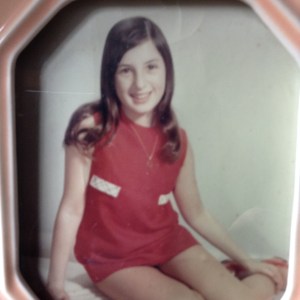 In 1969, when she was 11 years old, the first obvious indication we had that anything was wrong, was when she presented with multiple Grand Mal, status epilepticus (we didn’t know what this was at the time), rushed her to hospital where it took hours for the doctors’ to stop this onslaught. She awoke the next morning as though nothing had happened. Our Paediatrician admitted Janet to hospital the following week to undergo various tests, one of them being a lumbar puncture – no conclusion, only that it may be puberty. Nine months later exactly the same thing happened, after which Janet was prescribed valium and we were told she had epilepsy. I can’t believe how devastated we were to think she would have to live with this – little did we know.
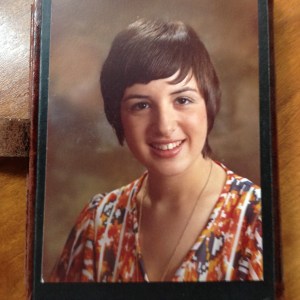 There followed 9 years of doctors’, specialists’, hospitals, homeopathy, healing and a myriad of different medications, taking Janet out of school at the age of 15 because the petit mal was so frequent it was interfering with her learning and she couldn’t cope, had remedial teachers at home to help with her writing etc., but to no avail. In desperation we took Janet to New York for 4 months in 1976 for an alternative treatment with a Dr. Laverne, which didn’t turn out well – but that’s another story.
 When Janet was 20 we wanted her to go to a day centre for 2 hours a week, but she had to be assessed by a Dr. Ben Sacks at our local hospital first, to see if she was eligible. On our first visit we explained Janet’s history and, of course, he was observing her. He told us he thought he had an answer for us but would have to run some tests first. After the tests he confirmed that Janet had Lafora Body Disease and what her life expectancy was. As parents’ of a loved child, we heard it but in our hearts’ we couldn’t believe it.
 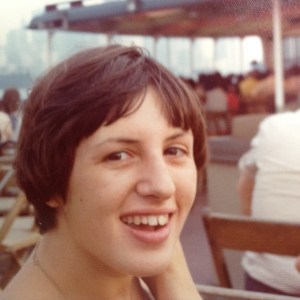 At that time he told us that there were 30 known cases of this disease in the world and because we were then worried about Lesley and Karen, he assured us that Lafora was not hereditary but genetic. Although this diagnosis was the worst news that we could have heard, that our daughter was suffering from a fatal genetic disorder, in a strange way it was a relief to finally know so that we could stop our relentless search for answers to our questions, and the extra pain and anxiety this caused us. So the searching stopped and we planned and had some wonderful holidays with our three gorgeous daughters’, celebrated all the good things we could to create happy memories. But for Janet it was really too late, because by this time her comprehension and general condition was so poor.
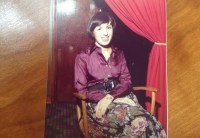 The big question for us was why all the top people who saw Janet in all those years couldn’t diagnose her. Ben said it was by pure chance that he happened to be reading an obscure article in a medical journal 3 weeks before we went to see him, and when he heard what we had to say and closely observed Janet, she presented the symptoms he had been reading about, and the following tests confirmed his suspicions. He looked after Janet until she left us on 2nd August 1981 at 8am, at home, with us.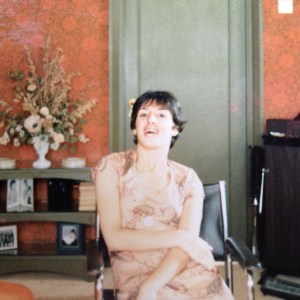

 Chelsea’s Hope c/o Dr. Donohue
