Lafora Disease Therapy

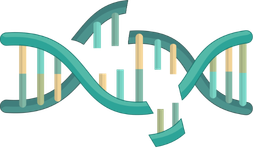
Lafora disease is caused by mutations in one of two genes: EPM2A and EPM2B/NHLRC1. When these genes are mutated, sugars in the cells start to accumulate and form aggregates called Lafora bodies. The accumulation of Lafora bodies drives the progression of Lafora disease. Researchers are studying several possible treatment strategies for Lafora disease. These therapies do not all work in the same way. Some are designed to reduce the formation of new Lafora bodies, some are designed to break down Lafora bodies that already exist, and others are designed to restore missing gene function.

This page gives an overview of the major Lafora-focused therapies currently being discussed in the therapy pipeline. It explains the main treatment strategies, compares possible strengths and limitations, and summarizes key therapy-specific information.

This information is for education only and is not intended to replace medical advice from a physician or care team.

ON THIS PAGE

Lafora Therapy Key Terms

Lafora BodiesLafora bodies

Lafora bodies are abnormal glycogen deposits that build up in cells in patients with Lafora disease. These deposits are especially harmful in the brain and are a major target of current therapy research.

GlycogenGlycogen

Glycogen is a stored form of sugar that cells can use for energy. In Lafora disease, glycogen becomes abnormal and forms Lafora bodies.

Glycogen synthaseGlycogen synthase (GYS1)

Glycogen synthase is an enzyme involved in making glycogen. Some therapies try to lower glycogen synthase activity so that fewer new Lafora bodies form.

Central Nervous System (CNS)CNS

CNS stands for central nervous system. The central nervous system includes the brain and spinal cord. This is important in Lafora disease because many of the most serious symptoms involve the brain.

Blood-brain barrier (BBB)Blood-brain barrier

The blood-brain barrier protects the brain, but it also makes it difficult for many treatments to reach brain cells. This is one of the biggest challenges in Lafora disease therapy development.

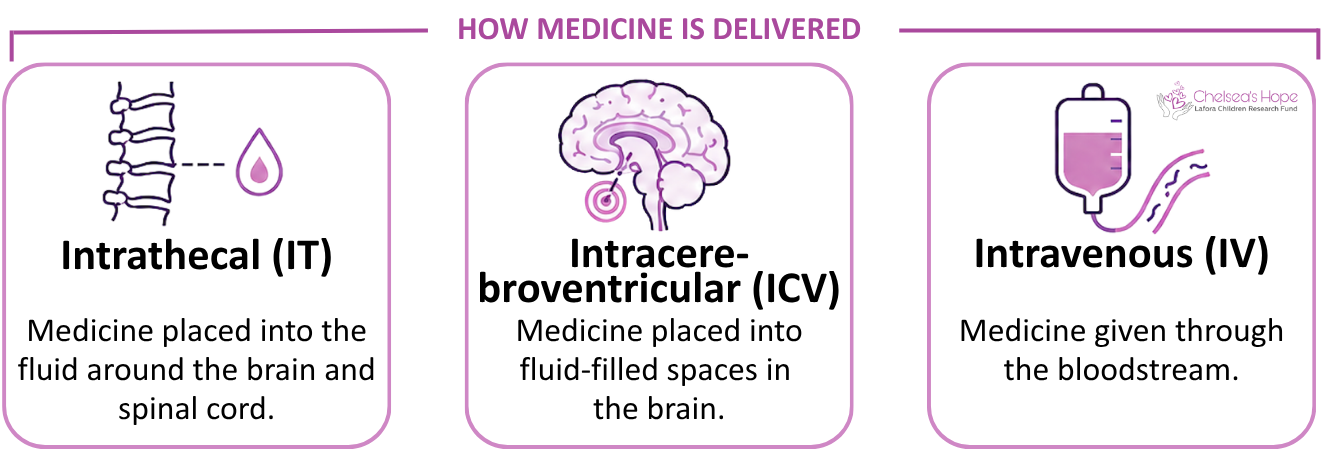
Drug delivery

Drug delivery means how a treatment gets into the body or reaches the area where it needs to work. Lafora disease therapies may use different delivery methods, including IV delivery through a vein, intrathecal delivery into the fluid around the spinal cord, or ICV delivery into the fluid-filled spaces of the brain.Intrathecal (IT) Medicine placed into the fluid around the brain and spinal cord. HOW MEDICINE IS DELIVERED Intracere- broventricular (ICV) Medicine placed into fluid-filled spaces in the brain. Intravenous (IV) Medicine given through the bloodstream.

Main Therapy Strategies

Preventing New Lafora Bodies from Forming

Some therapies are designed to reduce the formation of new Lafora bodies. These treatments focus on lowering glycogen production or changing the pathways that lead to abnormal glycogen buildup.

Examples include:

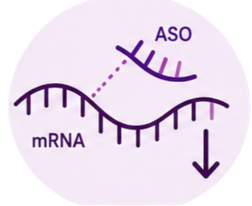
  • ION283 (GYS1 ASO)
  • Gene therapies or small molecules that reduce GYS1 activity

These therapeutic strategies may be especially important for slowing or halting future disease progression. However, they are generally not designed to remove Lafora bodies that are already present.

Removing Existing Lafora Bodies

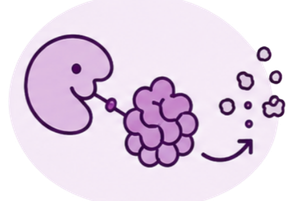
Some therapies are designed to break down Lafora bodies that have already formed.

Examples include:

  • VAL-0417
  • VAL-1221
  • Next-generation enzyme fusion therapies

These therapies may be especially important for patients who already have Lafora body buildup by the time they are diagnosed or considered for treatment.

Restoring Missing Gene Function

Gene therapy approaches are designed to restore the function of genes involved in Lafora disease.

Examples include:

  • EPM2A gene therapy
  • EPM2B gene therapy

Gene therapies aim to address the genetic cause of Lafora disease, but they are still preclinical and require more testing before they can move toward patients.

Lafora Disease Therapy Comparison Chart

Potential LD Therapy

Main Goal

Strengths

Current Limitations

ION283 / GYS1 ASO

ASO therapy

Reduce glycogen synthase to prevent new Lafora bodies from forming
  • Furthest along clinically
  • Already in a human safety study
  • Targets a key disease pathway
  • May be useful as a long-term maintenance therapy if an effective dose is reached
  • Not designed to reverse symptoms
  • Not designed to remove existing Lafora bodies
  • Lower doses may be too low to show clinical effect
  • Dose escalation requires FDA approval

VAL-0417

enzyme therapy

Break down existing Lafora bodies
  • Directly targets existing buildup
  • Designed to work in the cytoplasm where Lafora bodies are located
  • May help patients who already have Lafora body buildup
  • Could complement a therapy that prevents new buildup
  • Brain delivery remains difficult
  • May require repeated CNS delivery
  • Dosing and toxicology studies are still needed
  • Intellectual property barriers have slowed development

VAL-1221

enzyme therapy

Break down existing Lafora bodies
  • Helped show that enzyme-based approaches can clear abnormal glycogen deposits in mice through CNS delivery
  • More stable than enzyme alone
  • IV delivery did not reach the brain well enough
  • Currently limited by blood-brain barrier challenges
  • Not currently moving forward as an active Lafora therapy

Next-generation enzyme fusion therapies

enzyme therapy

Improve enzyme delivery to the brain to remove Lafora bodies from cells
  • Designed to address the blood-brain barrier problem
  • May allow easier delivery than repeated direct brain injections
  • Could help reach both brain and body tissues
  • Still early
  • Multiple candidates need to be narrowed down
  • Minimum effective dose, maximum tolerated dose, and toxicology still need more study

EPM2A gene therapy

gene therapy

Restore laforin function
  • Targets the genetic cause for EPM2A-related Lafora disease
  • Preclinical studies showed improvement in several disease-related outcomes
  • May be long-lasting if gene expression continues
  • Still preclinical
  • Dose-finding, toxicology, vector testing, and delivery still need more work
  • Will only apply to EPM2A-related Lafora disease unless broader strategies are developed

EPM2B gene therapy

gene therapy

Restore malin function
  • Targets the genetic cause for EPM2B-related Lafora disease
  • IV studies showed Lafora body reduction and some improved outcomes in mice
  • Still preclinical
  • Mouse model and behavioral outcomes need careful interpretation
  • ICV EPM2B did not affect Lafora body formation
  • Dose-finding and toxicology are still needed

Repurposed Drugs

repurpose drugRepurposed drugs are medications that were originally developed or approved for another condition but are later studied to see whether they may help with Lafora disease.

In Lafora disease, repurposed drugs are being studied because some existing medications may affect disease-related pathways, including glycogen/sugar storage, neuroinflammation, seizure activity, or disease progression. These drugs are not cures, and each medication still needs Lafora-specific evidence to understand whether it may be helpful for patients.

Examples of repurposed drugs studied or discussed in Lafora disease include metformin and other medications being explored in preclinical or early clinical research.

For more information, please see:

How Therapies Could Potentially Work Together

The therapies being studied may not all be competing with each other. Some may eventually be complementary.

One possible approach could involve using a therapy such as VAL-0417 or another enzyme fusion therapy to help clear existing Lafora bodies, while a therapy such as ION283 helps prevent new Lafora bodies from forming. Gene therapy approaches may also become important if they can restore missing EPM2A or EPM2B gene function.

This type of combination approach is still theoretical and would need testing. It is included here only to explain why different therapy strategies may all be important.

Summary of Lafora Therapies

There is not one clear “best” Lafora disease treatment yet. Each therapy has different strengths and different barriers.

ION283 is the most clinically advanced therapy and is focused on halting new Lafora body formation. VAL-0417 and related enzyme therapies are important because they aim to remove existing Lafora bodies. Gene therapies are promising because they target the genetic cause of Lafora disease, but they are still preclinical.

Because Lafora disease affects the brain, many therapies face the same major challenge: getting enough treatment into the brain safely. Research is moving forward, and different therapy strategies may eventually work together, but more testing is needed before most therapies can become available to patients.