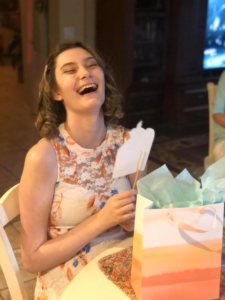
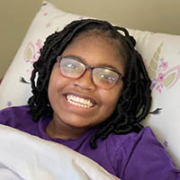
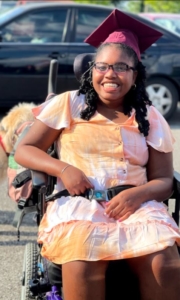
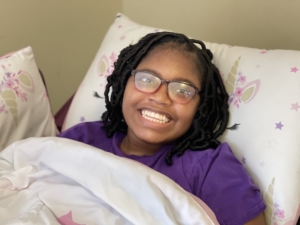
Anissa Merriam was a vibrant teenager, a talented artist who loved anime and excelled in honors classes. But at 14, she started dropping her pencil and her hairbrush, and struggled with her studies. Something wasn’t right, she told her parents.
Eventually, Anissa was diagnosed with a rare, neurodegenerative form of epilepsy that strikes in early adolescence, causing intractable seizures and childhood dementia. Most patients die before 30. Today, Anissa, at 23, likes to dress up like 1930s child star Shirley Temple, watch Disney movies and tap dance.
Anissa suffers from daily seizures and childhood dementia. She has a g-tube placed in her stomach to use for all her medications and she experiences ongoing cognitive decline along with swallowing issues.
At the age of 23, Anissa receives full-time care at home from her family and nurses. One of the most heartbreaking aspects of Lafora disease is that it robs seemingly healthy teens of their full potential.
Anissa is a talented artist and had several pieces of art selected for art shows during high school. In fact, she dreamed of studying art in college and using her talent as she reached adulthood. Anissa doesn’t draw any more telling her mom that she is unable to draw because her myoclonus, jerking motions, make it difficult to use her pencil and she has seizures while drawing due to Lafora. She often struggles just to write her name. Anissa also expresses her sadness about not having the experiences of driving, college life, and her independence like other young adults her age.
“This is a disease where we watch them go backward.”
Anissa’s doctors have informed her family that in time and without a treatment or a cure, she will lose her ability to walk and talk. Most children with Lafora do not survive past 10 years from the onset of symptoms.
Helping fund Anissa’s fight for treatment will slow the progression of the disease and give her time as she waits for a cure.
She has participated in a two-year natural history study to collect data on the progression of the disease at UT Southwestern Medical Center in Dallas. The information gathered has established biomarkers to help drive a clinical trial that was to begin in 2021.
Unfortunately, the clinical trial was delayed due to covid and other FDA requirements. The delay of this clinical trial was devastating to the family because Lafora progression never stops.
Recently, Anissa and her family were given hope again with a potential treatment that could help slow and possibly stop the progression while she waits for the clinical trial to begin, a biotechnology company with the promising treatment could help not only Anissa but other Lafora patients.
The only thing holding this process back right now is funding and since Lafora is ultra-rare, there is no funding to help to move their treatment forward to patients.
Your donation could make this treatment possible for Anissa and others who suffer from this horrific disease.
Time and slowing the progression are what Anissa an all Lafora children urgently need to make it to delayed clinical trials.
Please read this Washington Post article dated June 4, 2020 sharing Anissa’s Lafora story. It was written during covid when trials and research labs were shut down.
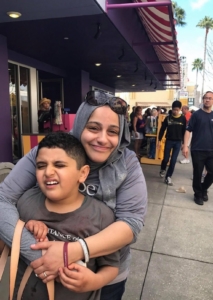
Azeza Kasham from Ann Arbor, Michigan, is pleading for support for her son Gigi’s fight against Lafora disease. Mother of three, she has already lost her firstborn son, Haitham, to this devastating disease at just 16 years old in 2019. Azeza is now fighting for her second son, Gehad, affectionately called Gigi, also diagnosed with Lafora disease, who is only 12.
Hope for Gigi
A cure didn’t come in time for Haitham, but there is hope for Gigi. Lafora disease is a single-gene disorder. By replacing one gene, you can cure the disease. Scientists have shown they can treat the deadly disease in the laboratory. Families like Azeza’s are desperate to bring these treatments out of the labs and into the children who need them.
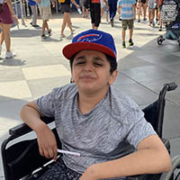
Gigi at 12
“Losing one son to this disease is enough and now the heartache is harder to bear, going through it all again with Gehad.” cried Azeza Kasham.
Prior to this diagnosis, children like Haitham and Gigi were like most other teens in the USA, attending school full-time with no signs or symptoms of any abnormalities. They were healthy and normal, had social relationships with family, friends, and peers.
Haitham deteriorated rapidly in a period of about three months, during which he lost his ability to walk or speak in sentences before his passing.
“One day he just fell on the floor and had a seizure” said Azeza Kasham
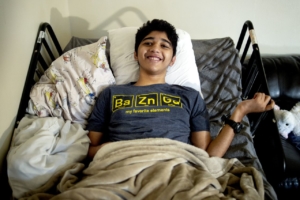
Haitham Breadiy
In 2017, Azeza reached out to Chelsea’s Hope Lafora Children’s Research Fund for support when Haitham was diagnosed and again in 2019 with Gehad. Small donations and emotional support have been provided by our small organization to help care for Gigi, but more is needed to make their home accessible and cover their bills.
Azeza had to stop working full-time to care for her family and her husband, who is recently in remission from Hodgkin’s Lymphoma, so not only has it been hard emotionally, but the family is not able to financially support themselves due to these illnesses.
Our goal is to raise awareness and much-needed funding to continue being able to support families like Gigi’s, Lafora research, and develop treatments. Chelsea’s Hope has done so much in recent years, and we are almost there….Hope is closer than it ever has been before!
Moniqueca Barfield from Gardendale, Alabama, is the mother of 18-year-old Khari McCrary. In 2015, at just 12 years old, Khari McCrary experienced her first seizure and was misdiagnosed with generalized epilepsy. Receiving the correct diagnosis when Khari was 14 years old, initially was very challenging as Lafora disease is commonly confused with epilepsy.
Khari is the first Lafora case known in Alabama at this time. In January of 2017, Khari’s seizures worsened, and she started having multiple seizures a day. In June of 2017, she was referred to a specialist who recommended a weeklong stay at Children’s Hospital of Alabama where she endured a week of testing on the epilepsy monitoring unit. It was then that she was diagnosed with the lifelong rare genetic disease called Lafora.
Khari at 14
Lafora is a progressive, autosomal recessive neurodegenerative disorder characterized by intractable seizures, difficulty walking, muscle spasms, neurological deterioration, rapid cognitive decline, childhood dementia, and oftentimes death, typically within 10 years of onset.
Before Khari’s diagnosis, she had a normal teenage life. Like most teenagers, she was very active in sports. In the fourth grade, Khari tested as a gifted child with an IQ of 118. Now she has an IQ of less than 60. She went from being a straight “A”, independent student to having an escort to assist her to and from her classes.
Mother, Moniqueca Barfield states in her own words “Our world has been turned upside down. Khari depends on someone to be with her at all times which is very emotionally draining for a 15 year old.”
Khari McCrary
I’m a single mother, working, serving in the military, and caring for my two school-aged children. I’m still able to work but I have to take a lot of time off due to Khari’s seizures and medical appointments. I have to ensure someone is present at my home to get her off the bus until I arrive home from work, and be with her at all times (bathroom, showering, etc.). On top of this, Khari has a younger sister who requires my time and attention as well. The financial burden is significant. I’m thankful I have an understanding boss and good healthcare coverage but even so, the constant trips to the emergency room and having to take time off for frequent doctor visits really takes its toll. I hope a cure can be found soon and that no child will have to go through what we’ve gone through. I wouldn’t wish this on anyone. My family lives every minute unsure when or where a seizure may occur. When Khari initially begin having seizures, she researched service dogs for her condition. At that time, I didn’t entertain the thought because I knew it would be another responsibility. However, once Khari’s condition worsened, I decided to apply for seizure alert service dog. Once we were approved, we faced another challenge of raising $10,000 of the $20,000 for a service dog through Service Dogs Alabama. After realizing how challenging it would be to achieve the goal within a timely manner, I decided to let the world into my usually private life and asked the community for help through an interview with WBRC. Khari has since received a wheelchair from Children’s Rehabilitation Services, and is due to receive her service dog in May. Now I’m faced with another challenge of not having a vehicle to accommodate our family and its special needs.”
Moniqueca has been a wonderful advocate for her daughter helping her since symptoms started. She created awareness to help get Khari a service dog back in 2018 to assist with alerting the family of Khari’s seizures, read the story here
Also just recently an update with Khari and her service dog Tallulah in August 2021, read the story here
Give $22 to honor Angelina’s heavenly birthday! She should have turned 22 on March 4, 2026.
Sydney, Australia
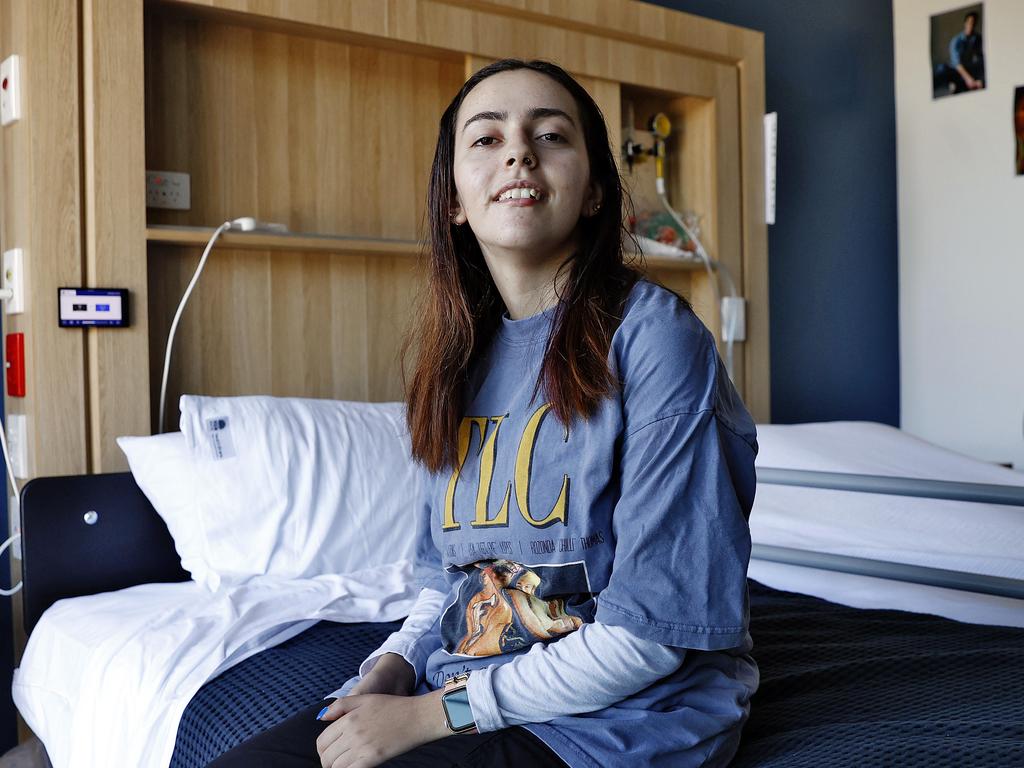
This is Angelina Lati from Sydney, NSW, Australia. Angelina lost her fight with Lafora disease on May 29th, 2025, at the age of 21. This is her story.
Lafora disease is a terminal neurological disease characterized by progressive myoclonus epilepsy, tonic-clonic seizures, cognitive decline, childhood dementia, and ataxia, just to highlight a few.
Before Lafora symptoms, Angelina was a typically developing teen, attending school full-time with no signs or symptoms previously. She was very social with her family and friends, participated in school musicals and drama, and did acting courses outside of school hours. She was an aspiring makeup artist with plans to start beauty in her senior school subjects and tertiary education. Overall, she was a good student and easily achieved all her academic milestones. Angelina was very goal driven and had big dreams.
2009: At 5 years old she was winning dancing competitions
November 2015: Angelina at her Year 6 Formal
2017: Angelina singing on her 13th Birthday
In September 2018, Angelina experienced the first onset of symptoms, a seizure, at 14.5 years of age. Angelina was hospitalized and misdiagnosed with Juvenile Myoclonic Epilepsy (very common with Lafora Disease patients). After 9 months, Angelina was hospitalized again due to increased frequency, duration of seizures, and suspected cognitive decline.
After almost 3 months in hospital doing multiple tests and trialing alternate medications, in September 2019, exactly a year later, genetic tests showed she had a mutated gene named EMP2A. This mutated gene is the cause of a disease named Lafora disease.
Angelina is extremely photosensitive and action sensitive. Photosensitivity refers to increased sensitivity to bright and flashing lights. Angelina has experienced seizures triggered by being present in very bright environments. Angelina’s action sensitivity is also known to trigger seizures, whereby Angelina experiences an increased frequency of seizures the more she physically exerts herself. It is important for Angelina to have periods of rest and inactivity to prevent seizures, so she is mainly contained in the home or a controlled environment for her safety.
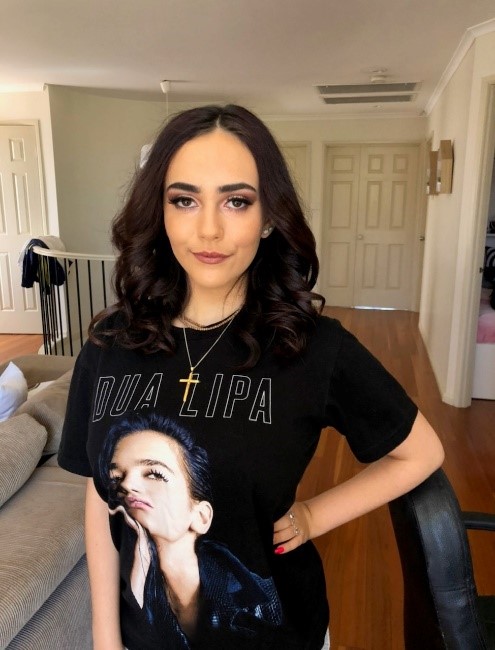
In February 2020, Angelina dressed up to meet Dua Lipa, thanks to the Make A-Wish Foundation Australia.
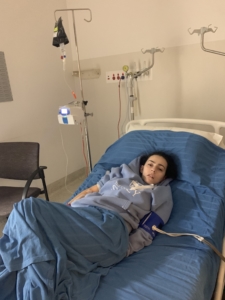
In late May 2020, Angelina was hospitalized due to the increased frequency and duration of seizures. During her hospitalization, Angelina experienced a significant decline in functional mobility. Angelina was having difficulty walking independently, speaking, and swallowing medications. Angelina underwent a surgical procedure to insert a gastrostomy tube to allow for PEG feeding and administration of medications as required, as well as the insertion of a Mirena IUD to control her hormone levels since those also seemed to trigger seizures. Angelina’s medication dosage was increased to control the seizures, and she was discharged from the hospital and stayed in a respite facility during her recovery.
By June 2020, Angelina began to experience an increased frequency of significant behavioral challenges, including irritability, non-compliance, and mood swings. These symptoms commonly occur with changes in the brain’s frontal cortex (associated with progressive dementia) and involve disinhibition. During these behavioral periods, Angelina refuses to eat anything, assist with self-care activities, get out of bed, or take her medications. Angelina has experienced a significant loss of short-term and long-term memory, and her processing speed has slowed significantly so it takes Angelina longer to be able to process and understand instructions or follow conversations.
In June 2018, Angelina’s schoolwork showed full pages of neat writing, underlining, answering questions and problem-solving. Less than two years later, Angelina was lucky to write a few words, read, and struggled to make simple decisions such as what shirt to wear.
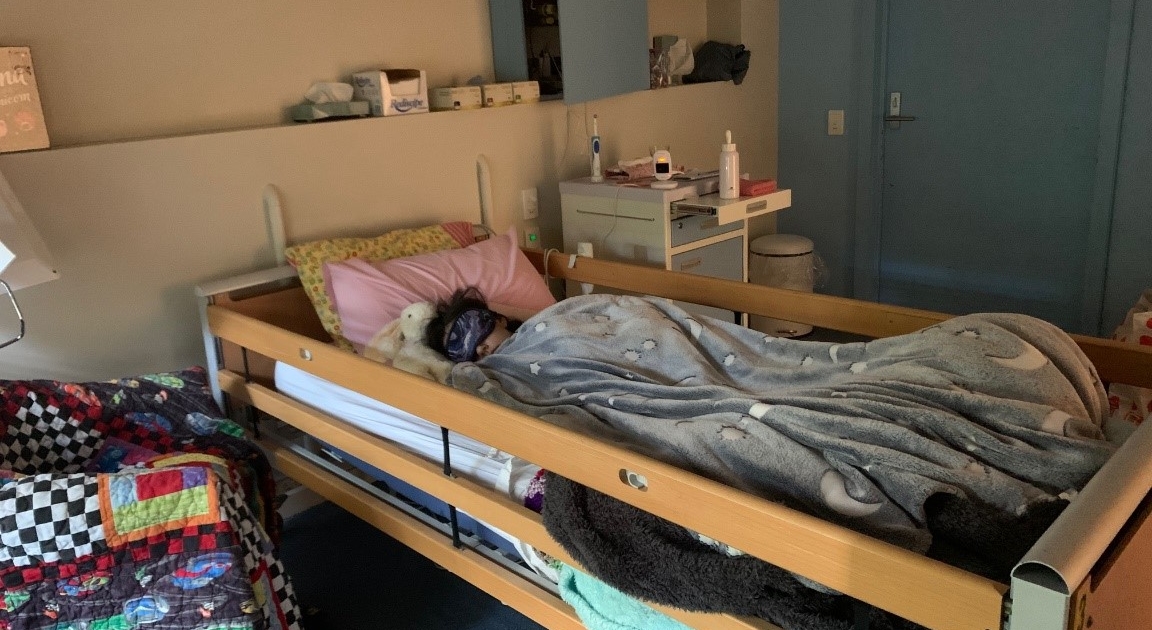
August 2020: At Bear Cottage, NSW Palliative Care Hospital for Children. Angelina is currently on several medications for the management of seizures and behavioral management, but these will eventually stop controlling her symptoms as they are already difficult to treat. She is currently having symptoms daily; it is only a matter of time before her health declines further and she becomes bedridden. Angelina is at high risk of Sudden Unexpected Death in Epilepsy (SUDEP) so every day is like a ticking time bomb. Her family is on high alert all day every day and have installed cameras to monitor her constantly.
Lafora disease is a rare disease that affect less than five in 10,000 people with only 80 registered Lafora disease patients around the world at this stage. It is believed that there are about 250 children around the world with this disease. Angelina is currently the only registered Lafora disease patient in Australia. There may be more children, but they could be misdiagnosed or asymptomatic at this stage.
Angelina in August 2020
There is currently NO cure for Lafora Disease.
Researchers have recently discovered that it is caused by a mutation in one of two genes that control the way cells store glycogen, a form of sugar, resulting in a toxic buildup of Lafora bodies in the brain.
Pharmaceutical companies in the USA have been working on treatments and therapies and planned to start clinical trials in 2021, but they did not happen, and families like Angelina’s are still waiting.
2023: Ange having her enzyme replacement therapy infusions
Access for Angelina to this drug could be years away, though researchers like Dr. Matthew Gentry, University of Florida College of Medicine, who founded the Lafora Epilepsy Cure Initiative (LECI), are doing great work.
Angelina lives at home with her family, who cares for her. She also has a nurse during the day. As the disease progresses, Angelina will need 24/7 care.
In early 2022, Angelina had slowed down a lot but was still able to walk and talk slowly. Her dementia was more progressive, her seizures were more frequent, and she’d be in her wheelchair most of the day. Angelina was fed 98% by her feeding tube. She started a biweekly experimental treatment that you can read more about below.
Angelina has been receiving biweekly Enzyme replacement therapy infusions of an experimental medication since 2022. This is possible through compassionate use that was approved in Australia, for which her family is grateful. It will take some time, potentially two years, to know the impact of this therapy and if her symptoms will slow down.
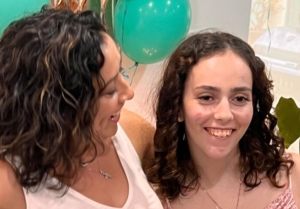
Now, September 2023, Ange regularly stays for respite and critical care at the new Many Adolescent and Young Adult Hospice – Australia’s first dedicated service for young people with life-limiting illness.
2023: Ange at the Adolescent and Adult Youth Hospice in Manly, Sydney, New South Wales, Australia
To see how Angelina Lati is doing, please visit @LaforaInitiative on social media: Facebook; Instagram; and TikTok.
Watch Niki’s latest update, filmed with the Childhood Dementia Initiative, here.





 Chelsea’s Hope c/o Dr. Donohue