The heroes of Chelsea’s Hope that will not be forgotten

Daniela Cerracchio

September 21, 1993 – April 23, 2014 / Italy

Thank you to Daniela’s mother, Paola Pacca, for sharing her daughter’s story and continuing to be a fierce advocate for the Lafora community.

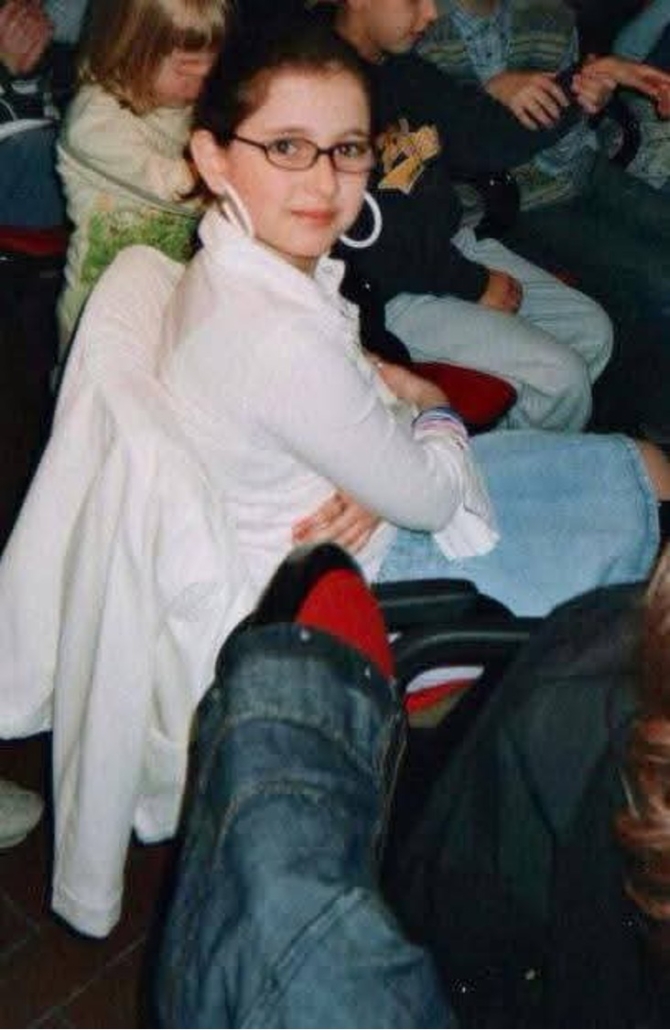
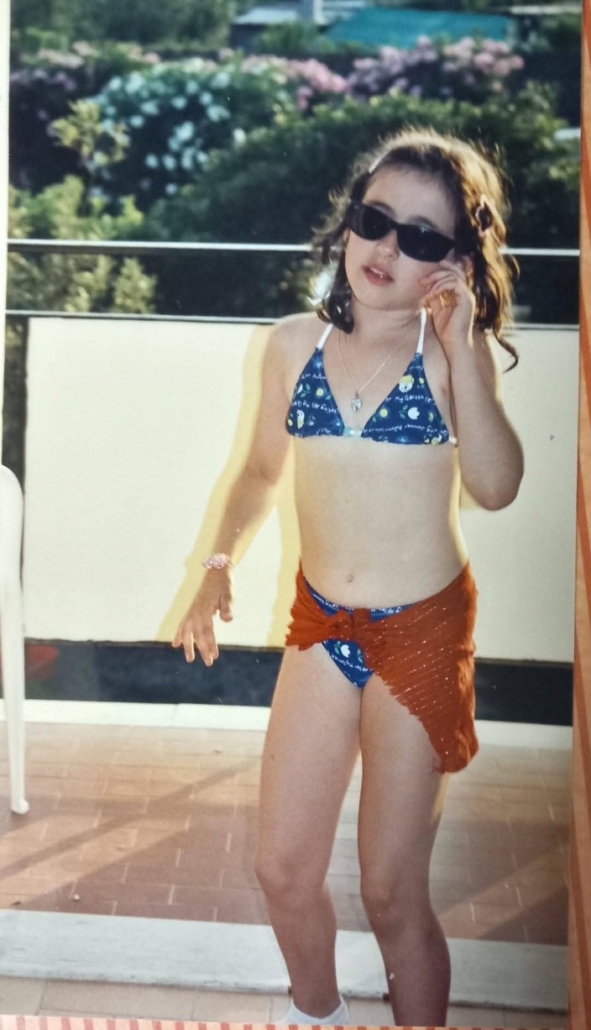
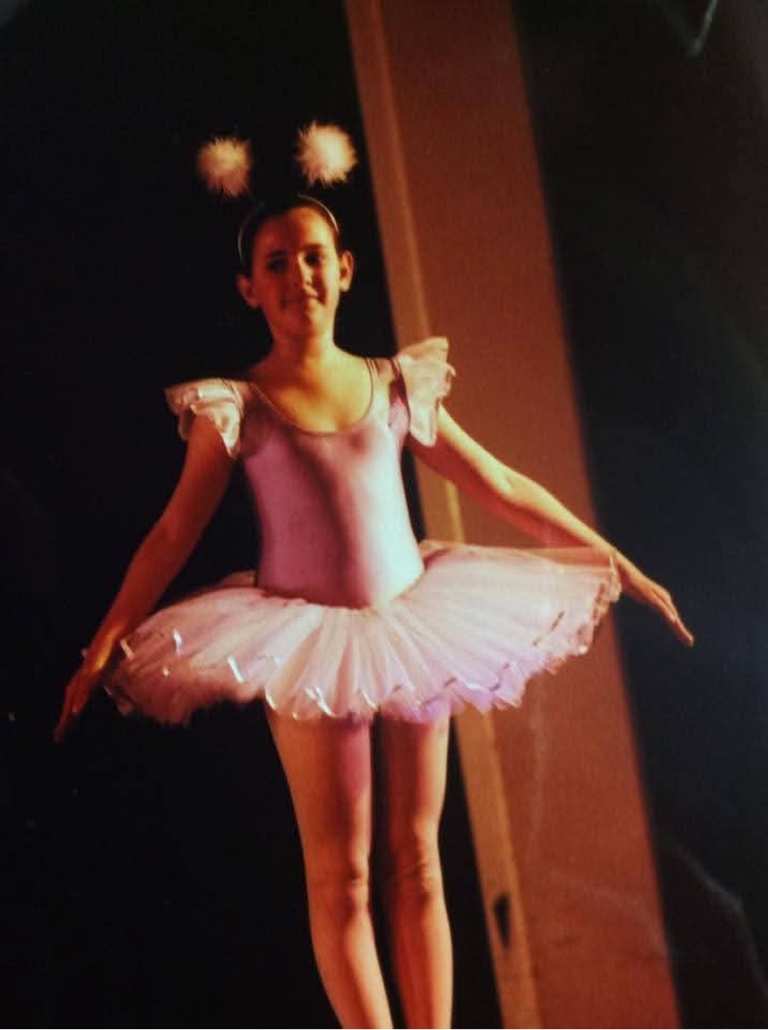
Daniela was a very cheerful child who grew into a determined teenager. She attended a classical dance school where she pursued her passion. Daniela also loved acting and music.
Everything Happened So Fast…

She faced some challenges in school, and at times, her mother shared that she thought maybe Daniela just didn’t like school. When she was 12, she began to say she felt dizzy, and the pediatrician decided to send her to a pediatric neurologist. The neurologist dismissed the dizziness because he said it was related to puberty. Despite that assessment, Daniela’s dizziness continued. Paola continued to advocate for her daughter until they prescribed Daniela an EEG test.

The test was performed in the morning, and that same afternoon, the neurologist called to ask if her family had any relatives with epilepsy.

Paola shared, “At the time, I couldn’t remember anyone…years later, when Daniela’s illness had progressed, I discovered that when I was a child one of my cousins had died of Lafora.”

The doctor told Paola to bring Daniela in, surprised she never had a seizure. In Daniela’s 10-minute EEG recording, she had 10 absences. She immediately began medication, Depamag, to prevent a possible seizure. 

There’s Something More Than Epilepsy

After only a month of treatment, at the age of 14, Daniela’s symptoms began to worsen. Things began to slip from her hands as she tried to hold on to them. She asked her family to take her to a psychologist. They visited many doctors, and they all said the therapy was fine.

But Daniela kept struggling, so much so that she could not finish her last year of middle school. She repeated her last year of middle school and was able to complete it with much difficulty. She was often battling fevers and headaches and was bothered by lights.

Daniela changed neurologists and ended up at the pediatric neurology department of the Meyer Hospital in Florence. There, they changed her medication and confirmed that she had Juvenile Myoclonic Epilepsy. Finally, they told her it would pass by the age of 19.
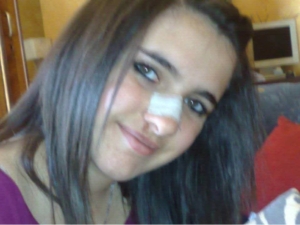
May 2009, after her first seizure.

Instead, in May 2009, Daniela had her first generalized seizure. She then had another one the same month, and then a third on August 15.

On the morning of August 18th, Daniela woke up and couldn’t stand. Also, she couldn’t remember where the bathroom was. Her family took her to the hospital immediately, and over the course of ten days, they ran many tests. The doctor then shared that Daniela had a degenerative disease and that she would continue to get sicker, but that they did not know what it was. By that time, she had lost the use of her hands.

Lafora Disease

The following month, in September of 2009, after a week-long hospitalization at the Besta Institute in Milan, her family received the diagnosis of Lafora disease. She was 16.

“It felt like a knife to the heart,” said Paola.
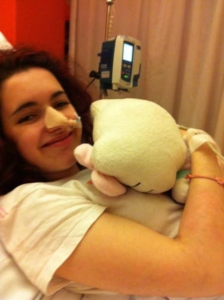
Her mother did not tell Daniela that she had a degenerative disease. She told her she had a form of epilepsy called Lafora and that doctors were looking for a cure.

Shortly after her diagnosis, Daniela began to struggle with the fact that she could no longer do her own hair and makeup as she used to before she was sick. She could no longer go to school and missed her friends. The only people Daniela saw besides her family were the caregivers who spent four hours with her daily. She found comfort in listening to music and watching movies.
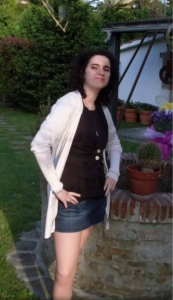
Daniela, age 17.

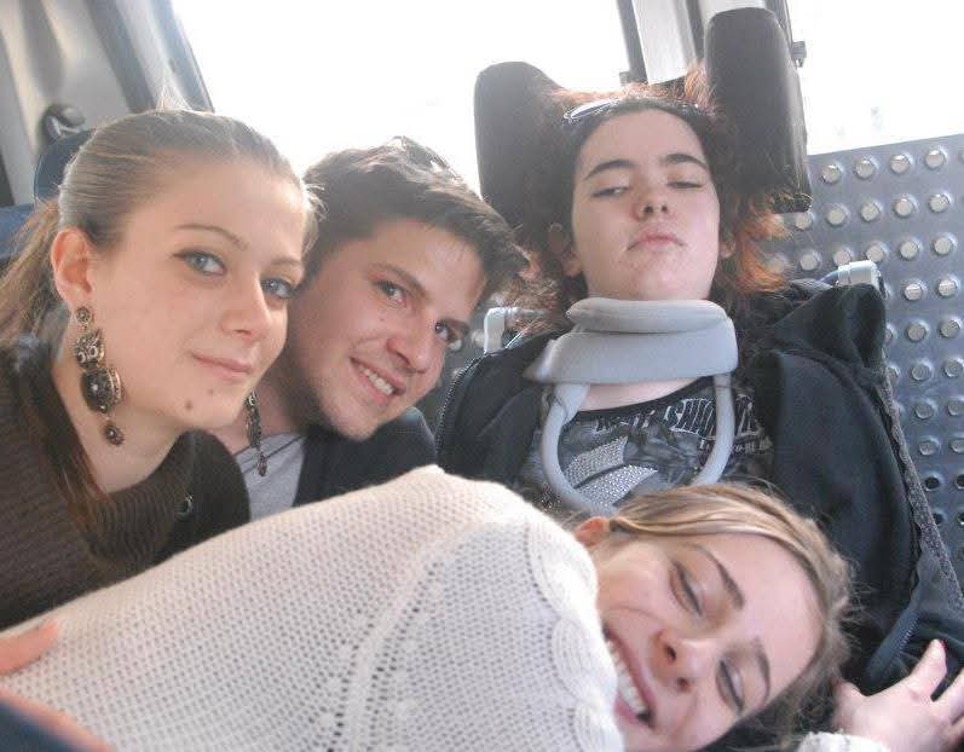
Fortunately, her isolation did not last, because five former classmates came to visit her. Daniela enjoyed reconnecting with friends; they would watch TV and come over for pizza. When they got their driver’s licenses, they would take Daniela out of the house until her symptoms worsened. She started forgetting the names of singers and could no longer go out the way she used to, or the way she wanted to.

Daniela Dreamed of Travel

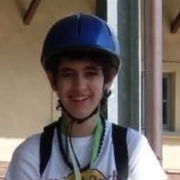
At 18, she attended Dynamo Camp, an inclusive environment for children and adolescents with neurological and oncological diseases. There, she was able to take part in various activities carefree, despite having multiple seizures.

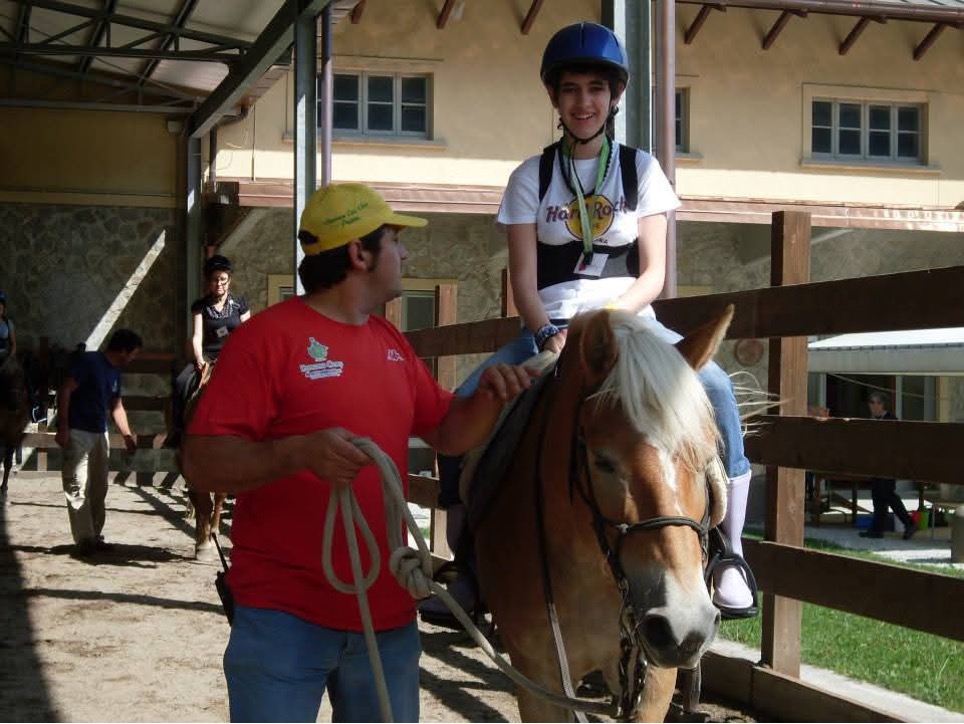
Around the age of 19, Daniela’s symptoms worsened. Before Lafora, she wanted to be a chef and travel around the world. Daniela dreamed of going to Berlin and learning German because she loved the German band Tokio Hotel. Daniela desperately missed her independence, but she could no longer walk. Her family started to take her out in an adaptive van to see the sea and nature, which she loved.  She was always happy to see her friends, too.

Lourdes, July 31 – August 6, 2013.

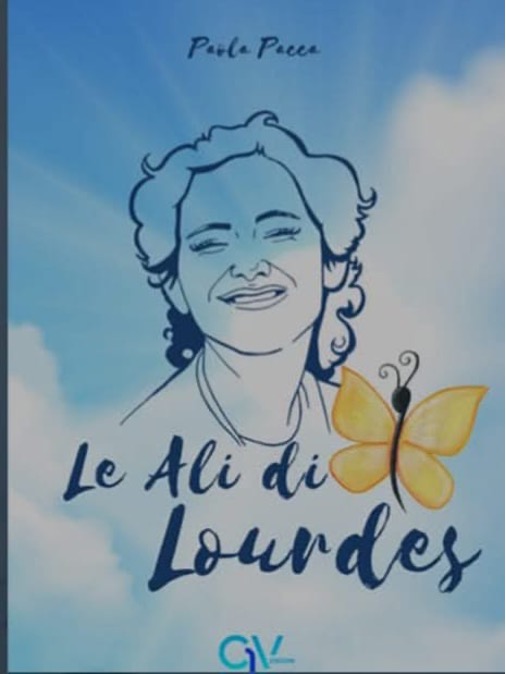
Eventually, Daniela could not get out of bed and needed a PEG tube. Paola and Daniela went to Lourdes on a trip organized by Unitalsi (National Italian Union for the Transport of the Sick to Lourdes and International Shrines). Even though Daniela was bedridden, she was happy.

In September 2013, Daniela took a turn for the worse. She began battling multiple seizures, PEG issues, high fevers, and frequent hospitalizations.
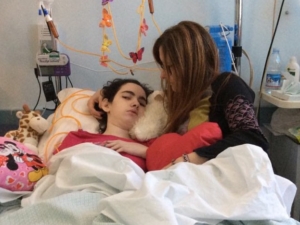
April 2, 2014, Daniela with her mother, Paola.

On April 23, 2014, at 6 in the morning, she put on her butterfly wings and flew free from all her pain. 


For Daniela (Farfallina Libera Di Volare), Little Butterfly Free to Fly in English, her family organized an annual charity walk from 2010 to 2019 to raise funds for Lafora disease research.

Paola also wrote a book about their experience at Lourdes.

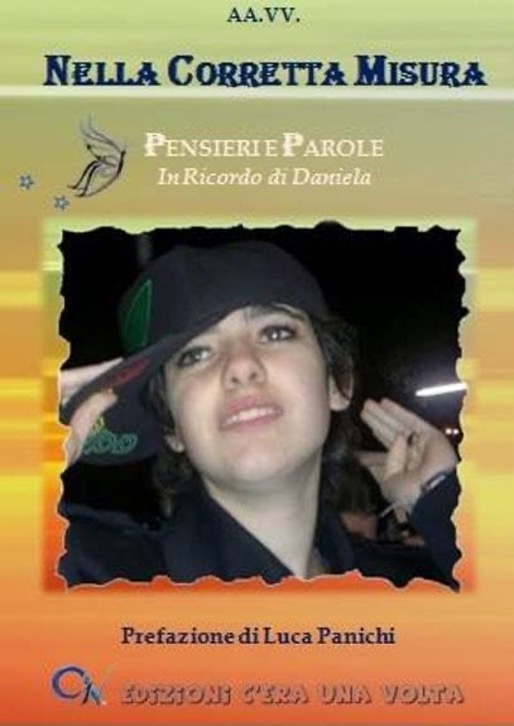
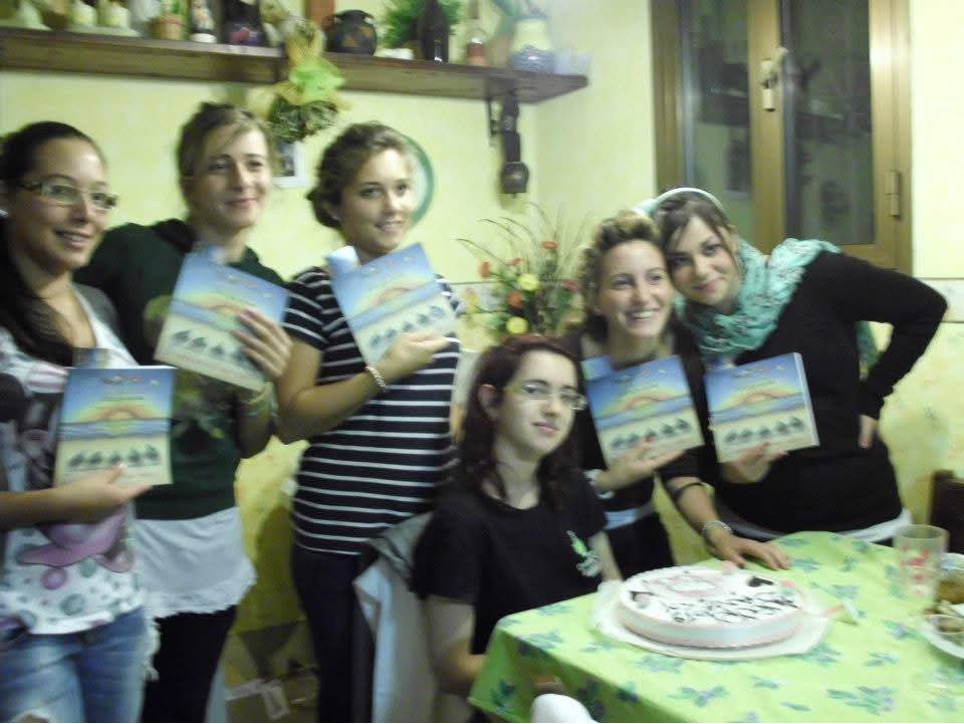
Friends wrote two books that support efforts to fight Lafora: ‘Tartarughe Sorprese,’ released in September 2012, and ‘Nella Corretta Misura,’ published in September 2014. 
In 2025, Samuele Rizzuto released a song dedicated to Daniela:


La storia di Paola in Italiano:

Daniela era una Bambina e Ragazza molto solare, ma anche testarda. A scuola aveva molte difficoltà, tanto da pensare che a lei la scuola proprio non piacesse. A Lei piaceva molto ballare, infatti andava in una scuola di ballo classico, e fare teatro; adorava la musica ed era molto vicina alle amiche che avevano problemi. Alle elementari aveva una amica sordomuta e lei era l’unica che andava a casa sua, anche alle medie lei scelse di starle accanto, perché diceva che gli insegnanti le parlavano lentamente, ma invece potevano parlare benissimo normale, così che lei l’aiutava a capire. Ha avuto anche l’esperienza di fare la scout.

Read more

Robin

February 10, 2000 – December 24, 2023 / France

 Thank you to Véronique Gadomski for sharing her son’s story:

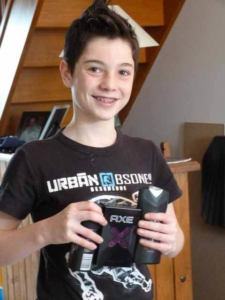
Young Robin smiling with axe body sprayHe grew up with no health problems

Robin was the eldest of 4 siblings.

Like many other Lafora children, Robin grew up with no health problems. Learning, whatever it was, was no problem. He was carefree, intelligent, a go-getter, sensitive, strong-willed, loving, subtle and funny. He loved his family, sports, friends, video games, vacations, fishing, the sea, and eating – basically, living life!

Epilepsy misdiagnosis

Robin had his first seizure at the age of 12, the day after a birthday party with friends. We found him convulsing on our trampoline, an image we’ll never forget. His eyes rolled back, excessive salivation, contractions of upper and lower limbs, no reaction… we thought we’d lost him. The fire department intervened and quickly realized it was an epileptic seizure. That was the start of the countdown.

He was put on Depakene for two years to treat idiopathic epilepsy. The neurologist told us at the time that it was highly likely that it was only temporary, as the EEG trace was not worrying.

During these two years, Robin developed like a “normal” teenager. He never had another seizure, so the neurologist stopped his treatment, which we were very happy about.

Robin

Unfortunately, eight days later, while playing basketball outdoors, Robin had another seizure. He was hospitalized again, and the neurologist asked him to resume his Depakene treatment, as the EEG tracing was not favorable.

It was a hard blow for all of us. Robin accepted the situation less well. He was 14.5 years old and didn’t understand why epilepsy had invited itself into his daily life. He didn’t want to be different; he didn’t want to be marginalized, he didn’t want to see the future in terms of this “invisible” illness that would complicate his life.

Life resumed its course, with the difficulties associated with epilepsy, the treatments, and the disorders that insidiously set in. They are imperceptible at first, until they become more visible. At 17, Robin was seen by an adult neurologist. He took over his case and listened attentively. Robin told him about his tremors, which were, in fact, myoclonus.

His diagnosis was changed to juvenile myoclonic epilepsy.

The seizures soon intensified, and the cognitive and psychomotor problems became clearer. Despite the difficulties, Robin refused to accept the help he needed with his schooling and his illness. He was increasingly difficult to manage and reason with. He was short-tempered, aggressive with those around him, and often acted without a filter. At that time, Robin chose to go and live with his father for a few months.

The trusting relationship with our neurologist enabled us to make progress with his diagnosis, and he suggested we carry out a genetic test to rule out any possible progressive myoclonic epilepsy.

Over the next few months, Robin’s condition only worsened. He had more and more seizures, his walking was unsteady, he was absent, and it became difficult to have reasoned exchanges with him. His condition was extremely worrying.

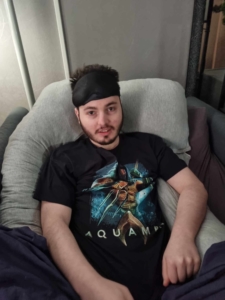
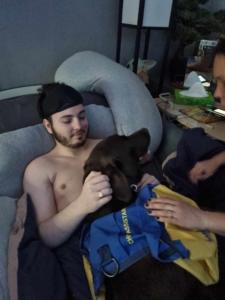
Robin got his Lafora Disease diagnosis Robin with a service dog

The results of the genetic test arrived 9 months later and told us that Robin was a carrier of Lafora Disease, a death sentence. At the age of 19, he forgot his first name, could no longer put a piece of clothing on a hanger, dress himself, or put on a seatbelt, and he suffered from seeing himself diminish in this way. He had to be taken out of school and placed under guardianship. A 24-hour supervision was necessary.

Less than a month later, when he was alone with his little brother at his father’s house, he didn’t know how to react when a fire broke out and ended up with 3rd-degree burns to both feet… Robin was then hospitalized for a month for a skin graft and suffered his first “state of prolonged epileptic seizure.” As a result, he prematurely became a wheelchair user.

Robin returned to live with us. This requires organizing with third parties, nursing staff, and structures to help us deal with the situation in the best possible way. Robin struggled to learn to walk again, despite myoclonus from Lafora and pain from his burns. He also had to cope with his father’s abandonment over the months.

But Robin is a warrior, he shows great mental strength and continues on his way.

After the COVID-19 epidemic, Robin suffered a fever worse than any previous episode and had to be hospitalized. His condition was worrying. He hardly woke up at all and had up to 30 seizures a day. We prepared for the worst. But Robin continued to fight and recovered after a few weeks of treatment. He relearned to eat and speak, and gradually regained his memories. And just two months later, he was back living at home, but not walking again.

 2023

Robin is now 23 years old and has already won many battles. He has been hospitalized at home, bedridden, and under 24-hour surveillance for three years. He has difficulty with light and heat. Robin has speech, comprehension, and swallowing difficulties, but he eats by himself with our help. His cognitive and psychomotor problems are progressing as the disease progresses.

When Robin can speak, his only question to the neurologist is whether there is a drug that will cure him…

This hope of finally seeing a treatment that will make us forget the horror of Lafora grips us all, patients, parents, families, loved ones, and researchers…

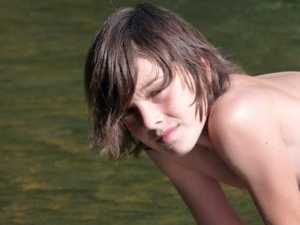
Robin near water

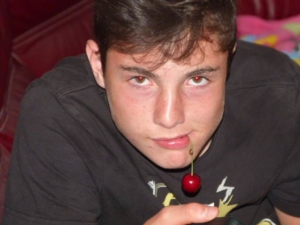
Robin with a cherry in his mouth


Learn more

Mathys Lucas

November 15, 2002 – February 26, 2021 / France

Thank you to Mathys Lucas’s parents, Christophe and Vanessa, who have shared their son’s story:

Mathys Lucas in his Quarks American football uniform.

Mathys played defensive back for the Quarks football team.

Mathys loved life

Mathys was a dynamic child who loved horses, horseback riding, and all animals. He was also passionate about American football, which he played for the Quarks near Paris as a defensive back. He was also a fan of the Rams, Travis Scott, and the opera.

Mathys loved life and was keen to try out all the adrenaline-pumping sports, from hang-gliding and paragliding to rafting. He had immense mental strength and a great sense of humor and was a loyal friend. He knew how to cut through things when he didn’t like them and could move on without looking back.

He never gave up in the face of illness and always tried to find a way to overcome the handicaps imposed on him by Lafora…

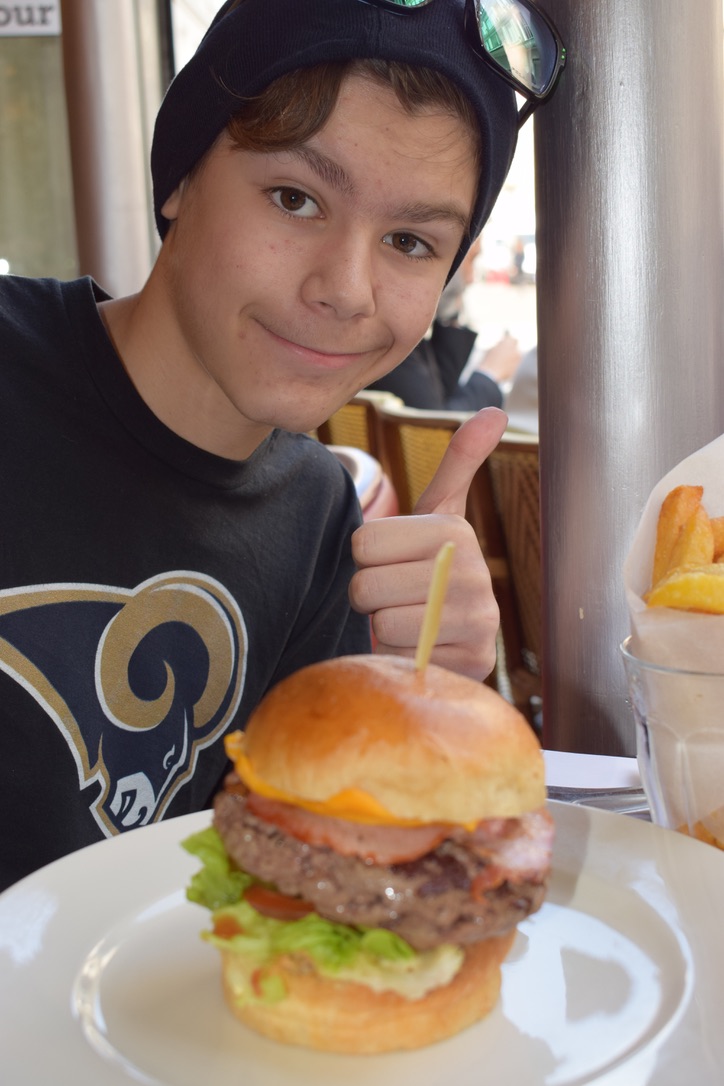
Mathys Lucas smiling and holding a thumbs up behind a burger.

Mathys loved the LA Rams team.

His battle with Lafora disease

Lafora’s illness became visible on August 17, 2013, after successive epileptic seizures leading to a strong tonic-clonic seizure and loss of consciousness. It became less present in the following months, then increasingly impactful and more burdensome.

In the autumn of his 17th birthday, we understood that he was suffering from Lafora disease, but we still didn’t have confirmation through medical analyses, which we didn’t get until May 2020. At that point, we had to have a gastrostomy fitted to feed him properly because the myoclonus of his tongue prevented him from swallowing. Still, the disease was becoming too exhausting and impacting, and he was losing weight and strength.

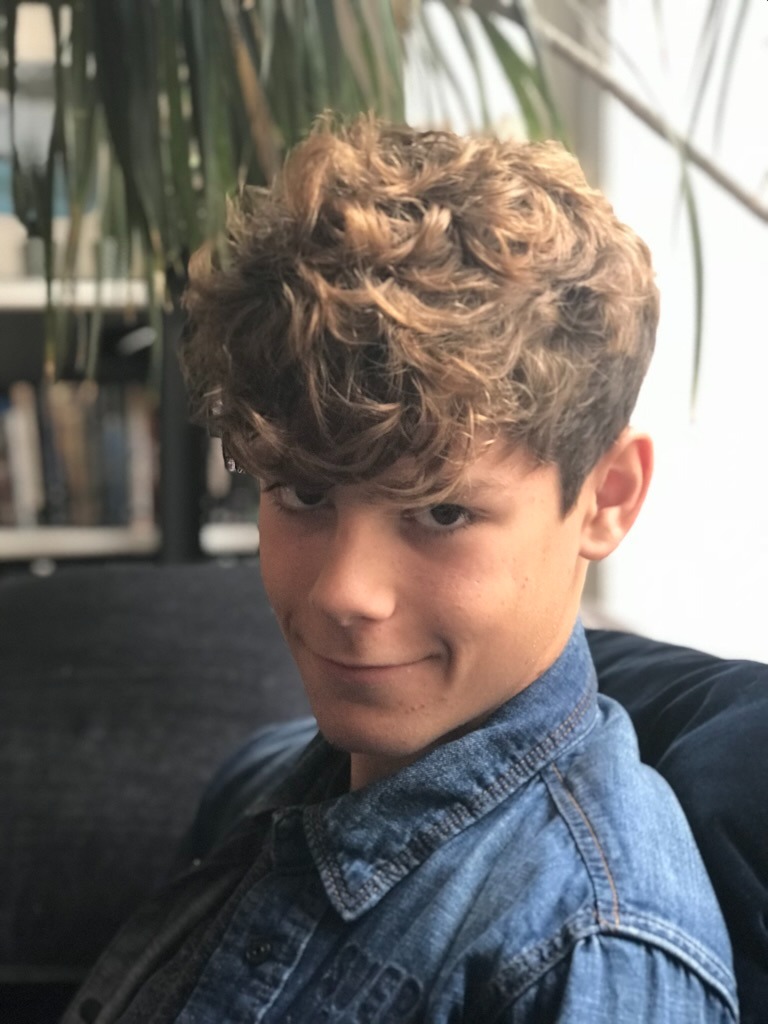
Mathys Lucas in a jean jacket, head tilted down and smiling.

Mathys loved life.

In his last year, despite the physical and psychological suffering, he managed to exchange smiles with us from time to time; he needed us all the time, knowing we were with him, and words were useless. In September 2020, he understood the path he was on… we supported him until the last day. At his request, we donated his organs to Lafora research.

After several weeks of support from a palliative care team, Mathys lost his battle with Lafora disease on February 26, 2021.

Alexis Rodriguez

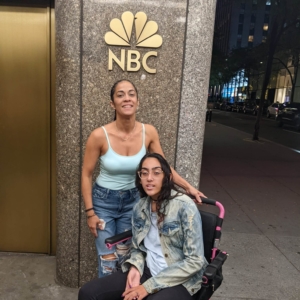
Alexis in front of NBC studios, NYC

Alexis passed away on August 30, 2025. 

New York, USA

Pre-pandemic, Alexis was a healthy 16-year-old, bright student. She played the violin, was an avid reader, and was a swimmer on the Freeport High School swim team.

Alexis pre-symptoms

Alexis was like all other teenage girls… She was active, enjoyed dancing, listening to Harry Styles and Billie Eilish, and loved spending time with her family and friends. Alexis also volunteered full-time in a neonatal intensive care unit at Mount Sinai South Nassau Hospital for two summers. Her dream was to become a registered nurse.

Sadly, her life changed quickly and dramatically over the past three years. She experienced frequent seizures, could no longer attend school in person, and later lost her ability to walk and talk.

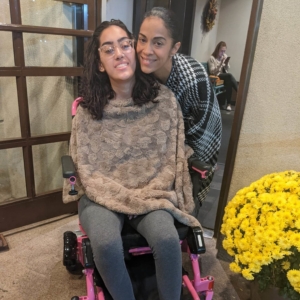
Alexis in her wheelchair

Now, Alexis is in a customized wheelchair. She requires nebulizer treatments to prevent pneumonia and receives physical therapy to maintain strength in her muscles and occupational and speech therapy. She recently had a feeding tube inserted in her abdomen as she has difficulty swallowing solid food.

Alexis is an only child. Her single mother, Altagracia (“AC ), tends to her every need, with the assistance of a nurse and her Godmother. Despite this devastating diagnosis, AC’s faith has given her the strength to care for Alexis and the hope that a cure will eventually be found.

May 2023 Update

For most of 2023, Alexis was stable. Just recently, within the last couple of weeks, her seizure activity has picked up a great deal. As a result, her behavior is different. Though Alexis hasn’t had any grand mal seizures, she is having a lot of myoclonus. Alexis hasn’t been able to even stand as much in the past couple of weeks. Her verbal communication has become worse. Now that it’s summer, her loved ones plan to try and get her out as often as possible to enjoy the weather and family.

Angels for Alexis

Her team of doctors, including geneticists and neurologists, has applied for FDA approval for the emergency use of medication to target the glycogen buildup in her muscles. However, Alexis’s insurance company will not cover the cost of this treatment, even though it could slow down the pace of this disease and give Alexis a fighting chance. AC started a GoFundMe for Alexis in December 2022. 100% of the proceeds will go towards the cost of this medication and any additional expenses that may be incurred during the process.

You can become one of “Alexis’s Angels” by donating today and sharing her story with everyone you know!

If you prefer, you may also make a tax-deductible donation through us. Please send a check or money order to:

Chelsea’s Hope Lafora Children Research Fund
c/o ALEXIS RODRIGUEZ
PO Box 348626
Sacramento, CA 95834

Or donate electronically, by clicking here and mentioning “TEAM ALEXIS.”
Follow the Angels for Alexis Instagram for updates on how Alexis is doing.

Press

Freeport Mom Opens Up About Daughter’s Rare, Terminal Illness

Jeremy Barmash, Patch
Freeport, NY
January 5, 2023

“A once vibrant girl from Freeport is battling a rare and fatal form of epilepsy.” [Read more…]

Freeport girl fighting rare, fatal epilepsy

January 12, 2023

“Alexis Rodriguez, a 19-year-old from Freeport, is facing a difficult and uncertain future as she battles a rare and fatal form of epilepsy.” [Read more…]