
• Link to X
  • Link to Facebook
  • Link to Instagram
  • Link to LinkedIn
  • Link to Youtube
  • Donate to fight Lafora disease!
  • Contact Us
info@chelseashope.org
Chelsea's Hope Lafora Children Research Fund
  • What is Lafora Disease?
    • About Lafora Disease
    • ICD-10 Codes for Lafora Disease
    • Lafora Disease Symptom Checker
    • Lafora Disease Therapy
    • Lafora Disease Clinical Pipeline Progress
    • ION283 Safety Study
    • Family Stories
  • About Us
    • Chelsea’s Story
    • Leadership Team
    • Advisory Board
    • Contact
  • News
  • Resources
    • For Families & Caregivers
      • Newly Diagnosed
      • Tips for Lafora Disease Families
      • Bereavement Support
      • G-Tube Tips – A Mother’s Perspective
      • Lafora Clinical Network Registry
      • Refer Your Clinician to the Registry
    • For Researchers
      • Lafora Mutations Database
      • Lafora Canine Registry and Database
      • Apply to Join the Clinical Registry
  • Events
    • 2026 Lafora Science Symposium
    • Courage in Care: Lafora Caregiver Series
    • Lafora Disease Roundtables
  • Get Involved
    • Ways to Give
    • Volunteer
    • Join Canine Registry
  • Click to open the search input field Click to open the search input field Search
  • Menu Menu

In Memory of Nael

August 28, 2026/by Chelsea's Hope

Nael, from Lebanon, passed away this past week of August 2026 at the age of 19.

His family shared that he was full of life; his smile was so bright despite Lafora. Before his symptoms began, he loved biking, running, and playing soccer. Please read the message below from his family and keep his memory in your heart:

“Nael was a happy, healthy, and completely normal child. In 2019, at just 12 years old, he experienced his first seizure. At the time, we had no idea that this would be the beginning of a devastating journey that would change his life and our entire family forever.

Over the next few years, his condition progressively worsened. By around 15 years old, in 2022, the disease had begun to severely affect his body and his ability to move and function. He went in and out of hospitals as his condition continued to decline.

Lafora disease slowly took away the things most of us take for granted. Nael eventually lost his ability to walk, talk, and function independently. Watching a child who had once been healthy and full of life become so limited by this terrible disease was heartbreaking for our entire family.
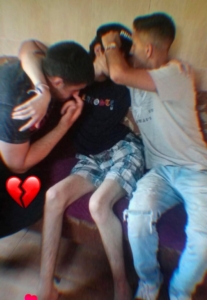
After years of fighting and countless hospitalizations, Nael’s body ultimately became overwhelmed by the progression of the disease and its complications. He passed away earlier this week in 2026.

Nael was so much more than his disease. He was a son, a family member, and a child who deserved the opportunity to grow up, experience life, and have a future. We want people to know his story and remember him for the beautiful person he was, not only for the disease that took him from us.

We are sharing Nael’s story because we desperately want to help raise awareness of Lafora disease and support the search for effective treatments and, ultimately, a cure. If sharing his story and photos can help researchers, doctors, or another family recognize this disease sooner or help move research forward, then we know Nael’s life can continue to make a difference.

We hope that by telling Nael’s story, his memory can become part of something bigger — a future where no other child and no other family has to go through what we experienced.

With love and hope,

Nael’s Family”

Share this entry
  • Share on Facebook
  • Share on X
  • Share on WhatsApp
  • Share on Pinterest
  • Share on LinkedIn
  • Share on Tumblr
  • Share on Vk
  • Share on Reddit
  • Share by Mail
https://chelseashope.org/wp-content/uploads/2026/08/Screenshot-2026-08-28-at-11.26.59-AM-e1787931650585.png 711 715 Chelsea's Hope https://chelseashope.org/wp-content/uploads/2022/02/ChelseasHope1.png Chelsea's Hope2026-08-28 08:45:392026-08-28 12:25:48In Memory of Nael

Lafora Children

About Chelsea’s Hope

Chelsea’s Hope began as a website in the fall of 2007 to share Chelsea Gerber’s story with family and friends. A 501(c)(3) organization since 2009, we have made an impact by raising awareness, connecting families worldwide, funding research, and maintaining hope. Our mission is to improve the lives of those affected by Lafora disease and help accelerate the development of treatments. [Read More]

Donate to Lafora Research

The mission of Chelsea’s Hope is to improve the lives of those affected by Lafora disease and help accelerate the development of treatments.

Chelsea’s Hope Lafora Children Research Fund is an IRS 501(c)3 nonprofit organization. EIN: 27-1008382

Location imageChelsea’s Hope c/o Dr. Donohue

976 Maywick Dr.

Lexington, KY 40504

info@chelseashope.org

Use ICD-10 code G40.C for Lafora.

    • Follow us on
    • Facebook
    • Instagram
    • Twitter
    • LinkedIn
    • YouTube
    • TikTok
ION283 Safety Study
Copyright © 2017-2026 Chelsea's Hope Lafora Children Research Fund. All Rights Reserved.
  • Home
  • News
  • About Lafora Disease
  • Donate
  • Contact
  • Privacy Policy – Other Policies
Link to: Join in Lafora Body Disease Day 2026! Link to: Join in Lafora Body Disease Day 2026! Join in Lafora Body Disease Day 2026! Link to: New Resource: Lafora Anti-Seizure Medication Guidelines Link to: New Resource: Lafora Anti-Seizure Medication Guidelines Last updated August 2026. L I V I N G W I T H L A F O R A A N T I - S E I Z U R E M E D I C A T I O N G U I D E L I N E S Expert opinion from Lafora Clinical Working Group, Chaired by Dr. Roberto Michelucci. Lafora disease is a rare and progressive form of epilepsy, and families are often told early on that seizure control will require more than one medication and ongoing adjustment over time. This expert opinion summarizes the discussion and survey results from a clinical working group of physicians experienced in treating Lafora disease. It is intended to give families a starting point for discussion with their own healthcare providers. Disclaimer: This article reflects the opinions and survey responses of a clinical working group and is shared for general informational purposes only. It is not medical advice and should not replace guidance from your own healthcare provider. Please review this information with your doctor before making any changes to a treatment plan. ANTI-SEIZURE MEDICATIONS FAVORED FOR LAFORA DISEASE When managing seizures in Lafora disease, clinicians routinely combine multiple anti- seizure medications (ASMs). When selecting which medications to combine for a patient, the clinician considers the efficacy of each drug, as well as the potential side effects. They will also take into account possible drug-drug interactions, the age of the patient, their weight and mental health. Therefore, seizure management may look very different for each patient, which is why it is important to consult with your personal physician. However, the clinical working group determined that the following medications are most commonly used as first-line treatments: Levetiracetam, valproic acid, and perampanel are typically the first medications prescribed for newly diagnosed patients Clonazepam is frequently used in everyday treatment plans, largely for its effect on myoclonus. It is also commonly used as a rescue medication when symptoms worsen Brivaracetam, topiramate, and zonisamide are frequently added to a seizure treatment regimen, often to help reduce myoclonus Phenytoin may be useful for short-term treatment of status epilepticus, but it is not recommended for long-term, chronic use MEDICATIONS GENERALLY AVOIDED IN LAFORA DISEASE Certain Anti-seizure medications, like sodium-channel blockers, are usually avoided because they can worsen myoclonus or fail to control seizures effectively. Some examples include: Carbamazepine Phenytoin (becomes a problem with chronic, ongoing use) Lamotrigine Gabaergic drugs Most anti-focal ASMs PLANNING FOR EMERGENCIES Status epilepticus, prolonged or repeated seizure that doesn't stop on its own, is a medical emergency. Clinicians most commonly reported the use of clonazepam or midazolam as first-line emergency treatment, sometimes followed by levetiracetam, brivaracetam, perampanel, or valproic acid or phenytoin in refractory cases. Every family should have a written seizure action plan in place. This helps ensure that emergency responders and caregivers know what to expect and how to respond, and may help avoid unnecessary ICU admissions. chelseashope.org | info@chelseashope.org | @chelseashopelaforacure | Chelsea’s Hope, 976 Maywick Dr. Lexington, KY 40504Chelsea's Hope Lafora Children Research FundNew Resource: Lafora Anti-Seizure Medication Guidelines
Scroll to top Scroll to top Scroll to top