ION283 Safety Study

The ION283 Safety Study at UT Southwestern is an exciting step forward! It will ensure a brighter future for the entire Lafora community.

We must fully fund the clinical costs of the study so all 10 patients can complete all their visits.

Keep reading for the latest news about the ION283 Safety Study and FAQs. We will continue to update our patient community as new information becomes available. Please ensure you are signed up for our mailing list to receive the fastest updates.

ON THIS PAGE

Latest Update

We are happy to share that all 10 patients enrolled in the ION283 Safety Study have now begun receiving the higher 30 mg dose at UT Southwestern!

The FDA approved the increase from 15 mg to 30 mg after researchers found that the lower dose was not enough to stop disease progression. Before the dose escalation, all 10 patients successfully received three doses of 15 mg.

So far, no major safety concerns have been reported. The research team is now collecting data to determine whether the 30 mg dose is enough to slow or halt disease progression. If additional dosing is needed, researchers may request FDA approval for another dose increase.

Another important focus of the study is the search for a biomarker for Lafora disease. The FDA has requested biomarker data to support future dose-escalation decisions and the continued development of ION283. Researchers at UT Southwestern are actively evaluating potential biomarkers that may help demonstrate whether the treatment is having its intended effect.


Regarding the ION283 clinical pathway, please read the latest announcement on our news page here. Ionis reached an agreement with Elpida Therapeutics.

Funding Needed to Finish the Study

Funding the ION283 Safety Study

Chelsea’s Hope has not stopped fundraising, but we need everyone’s help!

We created a campaign to fully fund the safety study that you can join. Here’s a short video walking you through how to get set up, or you can read instructions in the fundraising toolkit. The toolkit is packed with info to help you with your fundraising page.

Families, one effective way of fundraising is sharing your story. Please get in touch with us if we can help you in any way!

Our Collective Fundraising Progress

We are thrilled to share the collective fundraising efforts of our worldwide Lafora organizations: TempoZero, A.I.L.A., Cel-Luz, France Lafora, Chelsea’s Hope, and the Weiss family.

Together, we have raised more than 1.3 million dollars for the safety study.

Thanks to our global fundraising efforts, all 10 patients have been enrolled in the study. We are nearly 90% of the way to our estimated budget. We can’t stop now! Let’s raise 100% of the budget ASAP so the study can run its full course.

The estimated cost of the Safety Study is $1.5 million USD. We encourage donations through a patient organization, but you can give directly to UTSW (contact us to find out how!).

How does ION283 work?

Ion283 is a ASO (antisense oligonucleotide) therapy that is a type of medicine that can reduce the amount of a specific protein made by the body.

Genes contain instructions for making proteins, think of it as the blueprint. Before a protein is made, the cell creates a temporary copy of those instructions called mRNA so it can carry the instructions out of the nucleus in the cytoplasm for “workers” (ribosomes) to produce protein. ASOs are designed to find and attach to a specific mRNA message.

Once attached, the ASO can stop the message from being used by the “workers” (ribosomes), which means less of that protein is produced.

ION283 is designed to reduce GYS1, a protein involved in glycogen production. Researchers hope that lowering GYS1 will reduce the formation of Lafora bodies and slow the progression of Lafora disease.

Think of it like lowering the volume on a message that is being sent too often. The gene itself is still there, but the cell receives less of the instruction. 

The figure below illustrates how a GYS1-targeting ASO may reduce abnormal glycogen buildup and the formation of Lafora bodies.

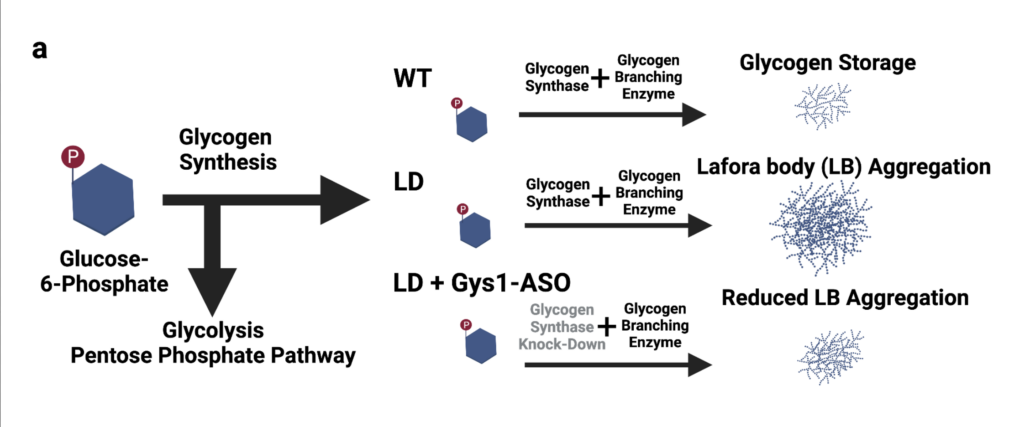
Figure 1. GYS1 ASO Reduces the Formation of Lafora Bodies

The diagram compares normal glycogen storage, untreated Lafora disease, and treatment with GYS1 antisense oligonucleotide (ASO). Lowering GYS1 activity reduces the formation of abnormal glycogen aggregates (Lafora bodies) in preclinical models.

Image adapted from: Donohue KJ et al. (2023). Gys1 Antisense Therapy Prevents Disease-Driving Aggregates and Epileptiform Discharges in a Lafora Disease Mouse Model. View on PubMed.

More information can be found:

Gys1 ASO rescues Lafora disease mice Gys1

ASO halts Lafora body aggregation in mice

Frequently Asked Questions about the ION283 Safety Study

Please feel free to send us any inquiries you have about the study if your question isn’t answered by our FAQs below.

IONIS logoThis will be a 2-year study to assess the safety and effectiveness of ASO genetic therapy in Lafora disease. Other forms of ASO therapy have been successful in treating other genetic diseases; hence Ionis Pharmaceuticals has developed a new ASO drug called ION283 for treatment of Lafora disease. ION283 has been shown to prevent Lafora Body accumulation in preliminary studies of Lafora disease animal models.

Berge A. Minassian, M.DDr. Berge Minassian is the Chief of Child Neurology at UT Southwestern Medical Center. He has been active in neurogenetics throughout his entire career and is a dedicated clinician treating Lafora disease patients. He announced that on April 11th, at the April 2024 Research Roundtable, his team submitted an Investigational New Drug application to the FDA for a safety study of ION283 ASO therapy.

He shared on August 14th that the FDA approved the ION283 Safety Study.

Blue text says 'UT Southwestern' above gray text that says 'Medical Center' The safety study will be held at UT Southwestern Medical Center in Dallas, Texas, and participants will have to be present in Dallas for treatment and assessment for about five days every three months. Participants would be responsible for covering travel costs, including travelers’ health insurance and accommodation; however, both Chelsea’s Hope will work to locate resources for families who need financial support to cover travel costs. UT Southwestern has a lot of experience with international patients and has previously partnered with Ronald McDonald House, which provides accommodation and meals for patients and their families. 

The study will last for 2 years.

The estimate is 1.5 million USD for running the 2-year study; however, this number could change! While Ionis is providing the drug free of charge, this is the budget required to cover the clinical costs associated with the study.

That depends on several factors. The current answer, unfortunately, is probably not. The FDA only approved the protocol for 10 patients. The investigators at UTSW could submit an amendment to expand the study, but they would need permission from Noventia, the pharma company that owns the license for ION283. Enough drug for 10 patients is guaranteed; however, additional drug for more patients would need to be negotiated with Noventia. 

So far, no patients have had an adverse reaction to the drug, so that is good news for the safety of the drug. However, safety is not the same as efficacy.

In order to show that the drug is effective, we need data that shows that patients remain stable over a significant period of time without the disease progressing. We will need the full two years of the study in order to determine if the drug made a significant difference to stop disease progression.

The ION283 drug is very stable, so we do not need to worry about an expiration date for the safety study. However, the FDA requires that the drug get recertified periodically. The current batch of ION283 would need to be recertified in September 2027. We hope that the study will be concluded by that time, but if patients are still receiving treatment, Ionis will get the drug recertified so they can continue treatment.


The frequency of injections is every three months. Yes, patients would need to continue for their entire lives.

Patients started with a dose of 15mg of ION283. Ionis did the pharmacokinetics analysis of the lower doses, and the team at UTSW requested that the FDA approve raising the dose to 30mg. The FDA agreed, given that a patient has already received three doses of ION283 at 15mg.

Blue text says 'UT Southwestern' above gray text that says 'Medical Center'

Chelsea’s Hope created a fundraising page in anticipation of the Safety Study. Lafora France also has a dedicated fundraising page.

You can make tax-deductible donations in your preferred country. Our organizations will then donate to the UTSW foundation once we have confirmation that the study is active.

You will also be able to donate through a foundation at UT Southwestern to support running the study. Chelsea’s Hope will send out details when the site for receiving funds is launched. If you haven’t already, sign up for emails from Chelsea’s Hope.

No. To keep the process fair, you cannot pay to have your child join the study. The 10 patients have already been selected through a first-come, first-served application process. Donations to the fund have no impact on who is selected to participate in the trial! 

Connect with Chelsea’s Hope for updates on the study, and help us spread the word!

Fondazione Telethon Logo

Fondazione Telethon

Fondazione Telethon is a non-profit pharmaceutical organization that develops and produces gene therapies.

For over 35 years, Fondazione Telethon has been committed to advancing research on rare genetic diseases, with a focus on areas where effective and sustainable therapeutic options are currently lacking and where public and market-driven investment is limited.

Telethon aims to translate scientific discoveries into approved, accessible therapies, ensuring long-term continuity of care for patients.

Through their research institutes and an integrated model that spans research, clinical development, regulatory engagement, manufacturing, and technology transfer, they have brought multiple gene therapies from their laboratories to patients. With the approval of the gene therapy for Wiskott-Aldrich syndrome, Fondazione Telethon became the first charity in the world to have a therapy developed in its own laboratories, authorized also for the U.S. market. This achievement reflects a unique model that combines scientific excellence, public responsibility, and patient-centered impact at an international level.

See more: https://www.youtube.com/watch?v=s7wn4KjIykA

If you have additional questions about ION283, please email us at ion283@chelseashope.org

More information about the safety study can be found on clinicaltrials.gov (https://clinicaltrials.gov/study/NCT06609889). Visit this webpage to learn about the inclusion/exclusion criteria, protocol, and contact information. Chelsea’s Hope continues to assist with fundraising for the study and receives regular updates on the study progress at UTSW. We will continue to communicate any information we learn with you, so please make sure you’ve signed up for our mailing list and indicated your email preferences.

If you have additional questions about ION283, please email us at ion283@chelseashope.org

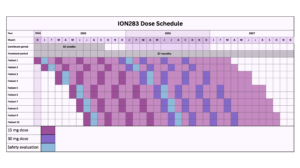
Each patient receives one dose every three months, and we need to collect data from all 10 patients before we can do a meaningful analysis. Since the patients were enrolled at different times, they do not all receive each dose at the same time.

In practice, at least one patient comes to the hospital for dosing each month, but we still need to wait until all 10 patients have completed the same dosing stage before the data can be reviewed together. This makes the process slower than expected, but it is necessary to make sure the results are reliable.

Science takes time, but the team is working on this every day.

Below is our current dosing schedule, showing when each patient is expected to come in for their next dose. 

Antisense oligonucleotide (ASO) therapy has already been used in several genetic diseases and has shown a good safety profile in people. Because ASOs are a well-established technology, they can often move into clinical trials faster and require less funding than some other treatment approaches.

Chelsea’s Hope supports many different types of Lafora disease research. However, not all therapies are at the same stage of development. At the moment, ASO therapy is one of the approaches closest to reaching patients, which is why we have invested significant resources in supporting its development.

That does not mean we believe ASOs are the only answer. We continue to support and follow other promising treatment strategies as well. You can learn more about the different therapies being studied for Lafora disease, along with their advantages and challenges

In the News

What’s Already Happened?

  • December 2025

    $100k Grant from the RTW Foundation

    Chelsea’s Hope was selected as a recipient of the 2025 Community Grant through the RTW Foundation. This foundation powers community initiatives that provide access to care for underserved populations. They have awarded Chelsea’s Hope $100,000 to support the Safety Study at UTSW.

  • Lafora Therapy Town Hall

    As we learned at the Lafora Therapy Town Hall, the FDA approved higher dosing of ION283 if patients have received three infusions of the lower dose. While the 15mg dose has been safe, the 30mg dose is predicted to be efficacious. That means it could slow or halt the progression of the disease.

    The team at UTSW is working to identify a biomarker, as requested by the FDA. They will share data with Noventia to accelerate a clinical trial in Europe. We have not heard any updates from Noventia since our open letter this summer.

    October 28, 2025

  • September 2025

    Symposium Updates

    As we learned at the 2025 Symposium, all 10 patients are now enrolled in the safety study!

    ION283 has been safe, but the current dose is not efficacious. The FDA approved a dose escalation for patients who have already received three doses at the lower amount. However, the FDA will require a biomarker for Lafora disease before approving any additional dose escalations.

  • Patients 7-10 Enrolled

    All patients are now enrolled in the study!

    August 2025

  • July 29, 2025

    Doc-text-inv Doc-text-inv

    Noventia’s Reply to Lafora Patient Community

    Noventia replied to the open letter from the Lafora patient community that they were in the final stages of formalizing an agreement with Fondazione Telethon for the clinical development of ION283. Read more here: https://chelseashope.org/noventias-reply-to-lafora-patient-community/

  • Open Letter to Noventia

    Read an Open Letter from the Lafora patient community and organizations: https://chelseashope.org/open-letter-to-noventia/

    July 3, 2025

  • June 24, 2025

    Fundraising Clarification

    You might be wondering if the safety study will continue to enroll the last four patients since we did not raise 100% of the budget by June 1st.

    Thankfully, they plan to enroll the final four patients in the following months. The faster we raise the funds, the faster they can be enrolled. As you might expect, each patient’s visit incurs significant costs.

    So, while we have some reassurances that UTSW will continue enrolling patients, we still need to fund their participation and cover the remaining costs for patients already enrolled. The patients currently enrolled risk not being able to complete the study if there is insufficient funding.

    Chelsea’s Hope remains committed to fully funding the safety study and encourages you to get involved. We really need your help!

  • Q&A

    On June 18th, Chelsea’s Hope hosted a Q&A session with Dr. Berge Minassian and Dr. Souad Messahel to discuss the ION283 Safety Study. Dr. Minassian shared that six patients have been treated so far, and three of those patients have now received multiple doses of ION283 without any safety concerns. The seventh patient will be enrolled by the end of June, and patients eight and nine have been notified of their inclusion in the study. Patient ten will be notified later this summer. 

    During the Q&A session, families asked questions about the FDA approval process, how soon we can expect results, and the next steps for advancing this treatment through the therapeutic pipeline. Check out our FAQ section to read the responses to these questions.

    June 18, 2025

  • May 18, 2025

    Patient 7 Funded

    “Officially fundraising for Patient 8 to join the Lafora Safety Study 🎉

    Thanks to your generous contributions, we’ve raised enough funds and pledges to enroll Patient 7 in the ION283 Safety Study…[read more].

  • Patients 5 & 6 Enrolled

    Update from Dr. Berge Minassian in the April newsletter:
    I am pleased to report that our Safety Study officially began last December. So far, we have enrolled four patients who have already received their first dose of ION283.

    Patients five and six are making arrangements to be enrolled this month and schedule their first treatment. We will continue to enroll patients as enough funding becomes available to begin their treatment.”

    April 2025

  • March 2025

    Patients 3 & 4 Enrolled

    The third patient is Giorgio, whose family is fundraising to support their traveling costs to Dallas.

    The fourth patient is Stella.

  • Enrollment Continued After Safety Check

    After a one-month pause for a safety check, the university’s board approved the continuation of the study.

    February 2025

  • January 2025

    Second Patient Enrolled

  • First Patient Enrolled

    We are excited to share that the first patient is in Dallas and received their first dose of ION283 in December. We are working on getting permission to share updates with the community.

    Families, the UTSW team will contact you directly if they can enroll your loved one. All information is kept confidential. Please join us in respecting the privacy of the safety study participants and in celebrating the news from Dr. Minassian that the safety study has started!

    December 2024

  • November 17, 2024

  • Q&A

    On October 14, Dr. Souad Messahel kindly joined us for a Q&A. The meeting recording and transcript are available upon request. Requests can be emailed to info@chelseashope.org. View her slides HERE.

    October 14, 2024

  • September 2024

    Eligibility Criteria

    During the 2024 Lafora Disease Science Symposium, the team at University of Texas Southwestern (UTSW) received the official National Clinical Trial number from the FDA for the ION283 Safety Study: NCT06609889. Families and clinicians can now find official information about the eligibility criteria and the study protocol on clinicaltrials.gov. The essential eligibility criteria are:

    1) Patients must be between 10-18 years of age at the time of enrollment (meaning they are at least 10 years old and have not yet turned 19 years old)

    2) Patients must have a genetically confirmed diagnosis showing a mutation in either EPM2A or EPM2B/NHLRC1

    3) Patients must be able to walk independently (meaning they can walk 10 steps without assistance)

    The additional update we have is that Ionis announced on September 4, 2024, that they reached an agreement to license ION283 to Noventia Pharmaceuticals. Read Ionis’s statement to the Lafora community HERE.

    The licensing of ION283 will not impact Dr. Minassian’s Safety Study at UT Southwestern. That will continue as planned, and we will update our community as soon as enrollment is open on clinicaltrials.gov.

  • FDA Approved

    The FDA approved the ION283 Safety Study in August!

    August 14, 2024

  • April 11, 2024

    IND Application Submitted

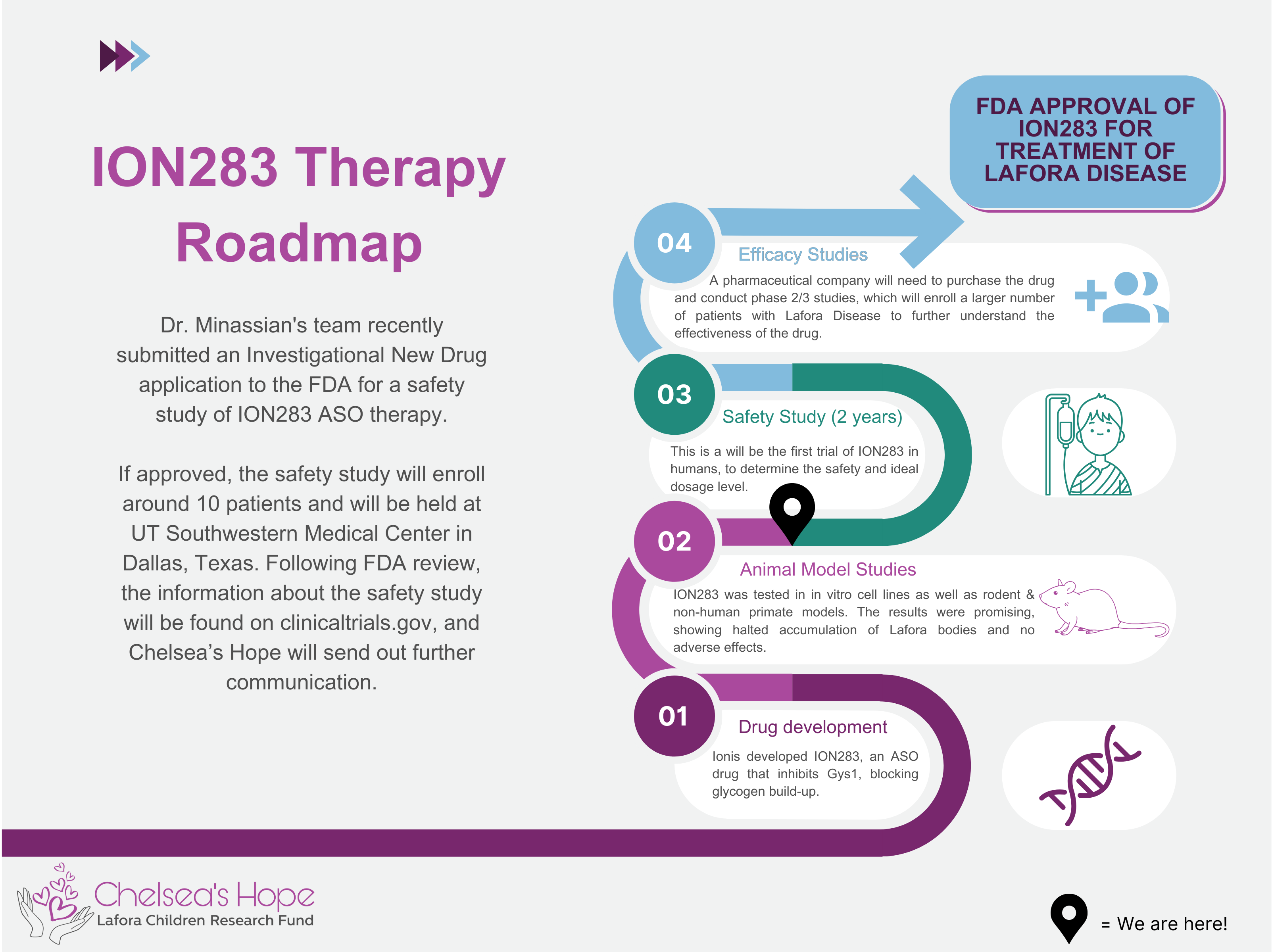
    Alt text ION283 Therapy Roadmap Dr. Minassian's team recently submitted an Investigational New Drug application to the FDA for a safety study of ION283 ASO therapy. If approved, the safety study will enroll around 10 patients and will be held at UT Southwestern Medical Center in Dallas, Texas. Following FDA review, the information about the safety study will be found on clinicaltrials.gov, and Chelsea's Hope will send out further communication. Step 1: Drug development - lonis developed ION283, an ASO drug that inhibits Gys1, blocking glycogen build-up. Step 2: Animal Model Studies - ION283 was tested in in vitro cell lines as well as rodent & non-human primate models. The results were promising, showing halted accumulation of Lafora bodies and no adverse effects. We are here! Between steps 2 and 3. Step 3: Safety Study (2 years) - This is a will be the first trial of ION283 in humans, to determine the safety and ideal dosage level. Step 4: Efficacy Studies - A pharmaceutical company will need to purchase the drug and conduct phase 2/3 studies, which will enroll a larger number of patients with Lafora Disease to further understand the effectiveness of the drug. Finally, that leads us to FDA APPROVAL OF ION283 FOR TREATMENT OF LAFORA DISEASE.

  • Safety Study Announced

    October 9, 2023